10 September 2011

Malinda Seneviratne - next president of Sri Lanka


Preamble
I am un-common, not in the sense that I am a rare creature, but I stand in opposition to the notion of a ‘common candidate’ or a candidate that professes a love for a collective and pledges to alleviate some or all of their miseries. I am ‘un-common’ then in that I am not common or, more precisely, not about ‘common’. I am, in other words, about me. About myself.

I am in this not for nation, not for that amorphous entity that is frequently prostituted on the political stage called ‘the people’. I am in this for the benefits that would accrue to me if elected President of Sri Lanka.

I am convinced that I am the ultimate ‘real deal’ because I promise nothing to those who have the right to vote. I am not interested in doing them any favours. I am in this race because I want power. Plain and simple.

I want power, but I don’t want money. I don’t want a salary because I earn a decent enough income by writing to newspapers. I don’t have a steady job but I am not unemployed. I don’t need bodyguards because I don’t believe I would be a threat to anyone.

I am not in this to correct institutional flaws and deliver better governance arrangements. Frankly, I wouldn’t know how to go about it. I am not in this to develop the country. I think that if the country is left alone, it will figure out a decent and better way of improving the lot of the people.

That, however, is something that people should worry about. Not my job, not my purpose.

I am not interested in bringing down the cost of living. I just adjust my consumption patterns to tide over hard times but I am not recommending this to anyone. I am not interested in resolving the unemployment problem. I am a beneficiary of free education, free health and all kinds of subsidies. I’ve been mollycoddled enough by the people and although I don’t have a permanent job, no EPF or ETF, I think I am a big boy and don’t have a moral right to demand a job. Therefore, I don’t see why I should worry about providing job opportunities.

Am I concerned about things like sovereignty, territorial integrity and democracy? Well, yes, but I worry enough about such things already. I don’t want to include these things in my manifesto.


Purpose
Let me reiterate: I am in this for myself. There are things I want to do which I believe I could do if I were President. Here goes:

In my life, I’ve loved, I’ve clowned around, done certain things, not done other things, have encountered the ata lo dahama in various forms at various times, seen certain things, heard things, tasted and touched. There’s a universe that is totally foreign to me but I don’t lose any sleep over this fact.

I have things to say. There are things I want to tell other people. I do this by writing to newspapers and talking to people I encounter, some known some unknown, some in specific contexts and some thanks to randomness. Not enough for me.

I am tired and need to retire, but before I do, I want to tell as many people as I can all that I need to say. Yes, it is about me. I can’t count on random people randomly reading what I write in newspapers now and then. I want to do it all in one go.

Promise No 1

My purpose then, is to become President so I can address the nation on national television (all channels if possible) on 12 occasions in the course of 6 weeks. I can’t think of any other way to reach the kinds of numbers I would capture in such a short period of time. I believe this would only be possible if I became the President of this country.

The following are the questions that I will reflect on when I address the nation once I become President:

1. Didn’t you know that the revolution begins with poetry and that it ends with the abandonment of love?

2. Does the season of illusion end with a thunderclap or is it gnawed away slowly by the rodents of doubt?

3. Do skyscrapers exchange knowing glances or raise eyebrows about rats and embezzlement that live and die in their stomachs?

4. When the mountain asked the river, ‘what did you do to my children?’ did the river reply, ‘I took them to their grandparents?’

5. Did the night notice how the mirror looked at you while you were asleep, and how the shoes took a walk wearing your skin?

6. When we wear the clothes that are demanded of us, do we stuff our unhappy skins in a trash can or turn them into drums beaten to unfamiliar rhythms?

7. If the insults and humiliations of all time were woven into a cloth would not the tapestry wrap the earth many times over?

8. If the world’s nostalgia were amalgamated and given tangible form, would we obtain paradise or an aberration we will never embrace?

9. If all the short change in short-changed transactions were gathered would we still have enough to satiate the world’s greed for all time?

10. Is eternity a lamp with a purple flame or is it trapped in a matchstick that will not ignite?

11. If the grape is made of wine; am I made of you?

12. Do I find myself somewhere among the pages I’ve spilled ink on or when my words demand the freedom to return to their sources?

Promise No 2

I will resign the moment I finish my 12-hour tele-drama, if I may call it that. I would, by this time, have arranged for my closest rival to be made Prime Minister. He will most likely replace me at the point of my resignation. I will then retire to grow vegetables and write poetry that will never get published.

Asset declaration
I have Rs 1,700 in the SANASA Development Bank as of November 17, 2009 (and a cheque for Rs 12,000 that I am yet to deposit). I own Rs 100,000 worth of shares in the same bank. I own a 52 perch block of land with a three-bedroom house in Polgasowita (purchased through a bank loan that will hopefully be repaid by the year 2022), three beds, four cupboards, a dining table and few other household items jointly with Ms. Samadanie Kiriwandeniya, some books, a laptop, some clothes, a toothbrush and a razor.

Symbol, colour, campaign slogan etc:
I will contest as an independent and will try to secure the symbol  ‘mirror’.  
My colour will be ‘colourless’.
My campaign slogan, Mama venuwen mama (I for myself).

My name, by the way, is Malinda Seneviratne: the un-common presidential candidate


Courtesy: Daily News - 18 November, 2009

A love note on eternal Tuesdays and recurrent Julys

I think it was Pablo Neruda who said that the saddest lines begin with the words ‘if only’. Come to think of it other people, poets and philosophers included, must have figured this out long before Neruda did; it’s just that I remember reading a poem by Neruda which makes mention of this truism. 

It is not just about love, though.  Human beings are frail creatures.  Burdened by ignorance and arrogance they blunder along wounding and getting scarred, with and without intention.  One might think this is as it should be considering the enormity of the collective ignorance of our species compared to the miniscule dust-speck of what we do know or, to be more precise, think we know. 

I believe though that species-ignorance in its voluminous all is not what makes us walk into trap, run at breakneck speed to breast a gummed-tape rolled in glass-shard.  Sometimes it is the truth that hurts us the most. We walk into knife not because we believe it s heart or petal but precisely because we know it is iron-made and sharp. No, not to satisfy some masochistic urge, but rather out of a deadly blend of arrogance and innocence, blind faith in knife-holder and the unshaken belief that a resolute heart will stand the test of the sharpest instruments of torture and death.


I remember an evening in the year 1971.  Navarangahala. It was the ‘interval’ during a performance of Sinhabahu. My father was explaining the story to my brother and I, 6 and 5 respectively.   I am not sure if he told the entire story right then or just what had happened up to that point.  Maybe he did a post-play recap for our benefit.  I do remember one thing.  He spoke about the Lion. He said that the Lion, upon recognizing his son, felt only love.  He said that this is why the arrow could not find its mark, did not pierce skin and kill.  He said that at that point love was replaced by anger and this was what thinned that shield, if you will (I am using this-age words and not the words I heard almost 40 years ago).  Maybe I got it all wrong.  I like the story though.

We might be dead wrong in believing that the knife-holder would not knife, intentionally or unintentionally; but if we are of resolute heart, full of love, no knife however sharp or however deep into breast it is thrust can take away life.  There are things that are more death-resistant than others. Like hearts. Not all hearts, no. Some.  Those that have resolved to accept that loving is made of giving and that a price is often exacted for the related bliss.  They are made for knifing.  Not just once, but many times.  Their hearts, as Faiz Ahmed Faiz once observed in an Urdu verse, having to know knife after knife after knife, cannot pause for grieving. 

On the ‘this side’ of that rarified land called Happily Ever After which is the least populated place on earth, there is a community of insane people who are fluent in the ways of the heart.  The clarity of their love is of a transparency that they can walk across the national boundaries that separate the sane and insane, without visa, without detection.  They do not transgress for their universes are unbounded.  They do not break rule for a heart that is ruled is not heart but mind. 

And so they err in the eyes of the world and the beloved, who even if he/she is as insane in the sanity of love and loving is as given to wandering in blind banishment.  They graze on lands made of words and silences, these heart-lost, mindless creatures whose life-breath is made of presence and waiting.  They share this earth with rule-preferred creatures who knowingly and unknowingly see and mis-see, say and slay. Slay, yes, but not heart, just togetherness. And they go as deigned by fractured orbit and un-fuelled drive, but nevertheless undaunted, convinced of another embrace, a second chance, a third, a fourth and so on. They do no feel knife because they are convinced that some encounters are embraces and some not and that certain embraces are dew-made pacts that are coated with a grace that makes it impossible to sleep and, sadly perhaps, impossible to die. Ever again.   

And so it is that some among us speak of eternal Tuesdays and endless Junes (or other days and months as preferred or decreed). They speak of recollection, vague and indelible, of lime slice and bitter lemon, words that are not found in the thesaurus, of capitulation and kneeling, penitence and the waiting for the executioner’s sword to severe head from body just so that heart will not be clouded by reason ever again.  They talk of things mis-named that bring misery and distance, abandonment and torture and yet are prompted to smile the smile of those sentenced to life imprisonment on account of heart-surrender. They speak of Tuesdays in week-less existences and Junes that did not break off from a tender May or bled into a tragic July but remained in a manner that wrecked calendars and calendarizing for all time. 

What is knife for those destined never to sleep again?  Nothing, absolutely nothing.  Just a pricking-instrument thrust again and again not to kill (because this is not possible) but to convince knifer that heart is too tender to be sent through paper-shredder and mind. 

They know all about ‘if only’. They know that it is just two words that have no meaning except in the commerce of the sane, those of the 10 year plan and the slicing of lifetime on the chopping board of reason.  They know time will not pass.  They just wait. Bathed in tears and love. 

Courtesy: Daily News - 1 October, 2010

08 September 2011

A preamble to a proposal for a war memorial


In June 2006 The Nation newspaper, in its ‘Eye’ section had a two page spread on war memorials.  I was at the time the Deputy Editor (Features) and I remember inserting two illustrations to decorate the pages.  The first was a cemetery set up by the LTTE.  The second was a blank space, duly boxed, to acknowledge all the 20,000 young men and women who were killed in the 1971 insurrection and the 60,000 who perished in the UNP-JVP bheeshanaya of 1988-89.   

In the first, tellingly, the birthdays and date of death had been omitted, for the LTTE had sent thousands of children to death. That’s something the pro-Eelam sections of the Tamil Diaspora don’t talk about even though it is their money that helped those innocent kids hurry into the Great Beyond.  The decision to insert that photograph was to acknowledge the fact that even those who died fighting the cause of a myth-mongering megalomaniac were nevertheless citizens of this country, needlessly sacrificed. 

Today, more than 4 years later, we are in a post-war situation.  Pro-Eelam sections of the Tamil Diaspora can rest easy that their brethren are not getting killed, even if they are upset that the end of the war also means that Sinhalese and Muslims (and yes, non-LTTE Tamils) are not dying in their hundreds. 

Yesterday was the moment of the tyrant, the rule of dread, the wails of orphans, sighs of widows, landscapes being scarred, scars being opened and re-opened, economies from household to national being devastated, temples being desecrated. Yesterday was made of waiting. It was made of wait dripping to shoulder-shrug to grin-and-bare.  Yesterday saw the consecration of helplessness, attended by the lie of invincibility. Yesterday belonged to quacks calling themselves historians and political analysts and pundits pampered by dubious dollars pontificating on all things under the sun, conferring legitimacy to a terrorist, twisting wild-claim into birth-right. 

Today we are terror-free and voices of Prabhakaran’s lackeys quickly moved from shout to whine and whine to silence.  Yesterday we held our breath, expecting an explosion any moment.  Today we are a breathing people.

Yesterday was made of wounds. Today, we must seek healing. 

Today I remembered those two photographs because there are things we should not forget.  History is written by the victor, this is true.  However, even a cursory reading of arguably the greatest and in many ways most rigorous chronicle, the Mahawamsa, would reveal that there are other ways of writing history, where blemish is called blemish and the fallen celebrated for that which is worthy of celebration. 

Today, in this moment of reconciliation, even as claim remains unsubstantiated and grievance (mis-articulated by way of exaggeration) un-redressed, there are things that need to be acknowledged.

Wars are about all kinds of things. Ideologies. Claims. Disputes.  Wars generate death. Destruction. Displacement. Wars are not happy things. They bring out the worst in human beings.  War is an excellent residence for cruelty.  Wars nevertheless bring out the best in the human being as well.  Bravery. Sacrifice. Heroism.  None of these can be monopolized by one party to the conflict.  Just as much as we cannot condone cruelty so too can we not forget heroism.

Those who fight each other are not one in objective. War’s end allow for retraction, admission of guilt and forgiveness on account of all kinds of errors, especially those that are not sourced to ideology and objective. War’s end can of course result in a putting-behind and moving ahead on account of changed circumstances, but that’s something that should not be taken as given. Still, I believe that a different kind of embrace is possible and indeed desirable.

Both victor and vanquished share the will to live and fear of death, both share the fact of indulging and suffering cruelty, both are one in heroism. Close to a hundred thousand citizens of this country perished over the past 30 years in a needless war.  They were all children of this land, sons and daughters of mothers and father who would never have envisaged the babies they cradled would suffer the fate they did.  They all died in vain. 

The true monument of reconciliation should occur in heart. The true embrace should be the clasp of heartbeat with heartbeat only made possible by recognition of common humanity.  Takes time.  Until then let us grieve our dead and mark our grievance with a monument to all our citizens who died whichever side they fought on whatever political signature was etched on the bullet that ensured dream-end. 

Let there be a war memorial etched with all names, a grand mix of identity, so we can remind ourselves that our past, bloody and tear-filled, was made of an inextricable weaving of lives, so too should our future be; made of ourselves and one another, in our common humanity and common destiny as children born on this island who will have to live and live together, breathe and breathe together, now and always.   

Courtesy: Daily News - 20 December, 2010


07 September 2011

Meditation on the virtues of dumbness

One of my all time favourite English films is ‘One Flew Over the Cuckcoo’s Nest’, adapted from the novel of the same name by Ken Kesey and directed by Milos Forman.  The film won all five major Academy Awards (Best Picture, Best Actor in Lead Role, Best Actress in Lead Role, Best Director and Best Screenplay) in 1975, six Golden Globe awards and 6 BAFTAs. 

The film is set in a mental hospital where the energetic, flamboyant, wise-guy anti-hero Randle Patrick McMurphy (played by Jack Nicholson) stuck in the facility for an evaluation while serving a short prison sentence for statutory rape rebels against the ‘Establishment’, i.e. the institutional authority and rigid attitudes personified by the supervisory nurse, Mildred Ratched (played by Louise Fletcher).

Jack Nicholson as Randle Patrick McMurphy

McMurphy, although not exactly a saint and yet one feels for the man as he rants, raves, innovates and goes nuts trying to mobilize a set of docile (well, ‘dociled’ would be the better term) inmates to break free if not from the facility at least from the mind-set they’ve been cajoled and arm-twisted to acquire. 

McMurphy carries the film.  My favourite character, however, is ‘Chief’ Bromden (played by Will Sampson), a 6 foot 7 inch giant who we are made to believe is dumb as in ‘cannot speak’.  It is much later in the film that McMurphy discovers that Chief is not as dumb as he makes himself out to be (literally and metaphorically).  McMurphy puts up quite a fight but finally and tellingly, he gets done-in by a lobotomy.  ‘Chief’ manages to extract a consolation prize from the establishment; he gives McMurphy a literal death by suffocating him with a pillow and proceeds to execute the escape plan that McMurphy just didn’t have the strength to carry out earlier in the film.  He lifts the hydrotherapy console off the floor of the ward, hurls it through a grated window, climbs through and runs off into the distance.

I like the McMurphy character, but it remains an easy ‘write’.  Rebels are easy to script. ‘Rant and Rave’ is child’s play for anyone writing a screenplay.  ‘Dumb’ is tough to write. ‘Dumb’ is tough to be. 

There are times when ‘Rant and Rave’ inevitably meets brick-wall.  Doesn’t necessarily end up with lobotomies being carried out, but it is natural to script in ‘severe headache’ and ‘nutcase’, the latter possibly a hero to some and remembered with some affection by history book but by and large of little accomplishment and classed more or less as scripted.  There are times for heroes. There are times for the reticent. There is a time to rant and rave and there is a time to be silent.  There is a time when some have to scream and others have to be silent.

There are screamers who get lobotomized. Indeed, screams have to get lobotomized for the silent to find a way out and walk into a territory called Freedom.  Some have to scream because that’s all they know.  They are not dumb, not all of them. Some of them actually know that they will end up on the operating table and be decapitated one way or another. Or shot, in certain cases. 

So we rant and rave, us writing people, us screamers and protestors.  We get ‘treated’.  Maybe we are dumb.  On the other hand, maybe we are not.  If those who rant and rave end up making others realize their strength, recover self-belief and pride, then someday, somewhere, someone will say ‘thank you’, perhaps not by snuffing out ‘life’, or perhaps by doing just that, considering what this ‘living’ is made of post-operation. 

I am sitting here, thinking of how one flew over a cuckoo’s nest.  There was a ranting and raving McMurphy. There was ‘Chief’. Dumb, apparently.  I haven’t seen the film in a while, but I am ‘seeing’ it right now, as I write.  It’s a brand new film from what I remember.  McMurphy is certainly a ‘presence’, but it is ‘Chief’ that carries it.  Good to keep in mind.   

Courtesy: Daily News - 9 September, 2010

06 September 2011

Reflections on ‘The Ponting Principle’


Former Australian Captain Ricky Ponting
The Australian cricket captain, Ricky Ponting, is unarguably one of the best batsmen the world has ever seen. His career statistics in all forms of the game makes awe-inspiring reading: total of 11,435 runs in Tests (average: 55.88) and 12043 in ODIs (average: 43.32).  He has scored 38 Test centuries and 28 in ODIs.

In the first Semi-Final of the ongoing Champions Trophy in South Africa, Ponting scored an unbeaten 111 of 115 balls and with Shane Watson (136 not out, off 132) to see off a resurgent England team.  It was not ‘extraordinary’ on Ponting’s part because he is so good that one almost expects him to deliver each time he walks out to the middle.

Sri Lanka is out of the tournament after weak outings against England and New Zealand following a clinical performance against hosts South Africa. The sports pages this Sunday are full of cogent post-mortems on Sri Lanka’s early exit. I am sure Kumar Sangakkara, the selectors, coaches and others involved with cricket in Sri Lanka will have their own theories and, if they are not arrogant, will at least read these analyses and pick up some tips for the future. 

I am hopeful, too, that they will not miss a brilliant 3-word explanation of success offered by Ricky Ponting regarding the secret of his team’s success: ‘Respect every ball’.  That was his message to his team mates before taking on England, a team that the Australians thrashed 6-1 just a few weeks ago.  The subtext is very clear: no complacency, nothing frivolous, no showmanship; just discipline and hard work in the middle. It worked.  I would say it works most of the time. 

What is respect?  It is about treating each delivery on its merits. It is also about playing the percentages; taking risks only when you can afford to take them and milking the singles until you are set. If Shane Warne offers you a full toss you don’t pat it down back to him because he is Shane Warne: you clobber it over midwicket because it is a loose ball meant to be put away. This does not mean that Shane Warne is having an off day, it must be remembered.  His next delivery could be a replica of the ball-of-the-century (his first on English soil) at Old Trafford when he got the ball to pitch several inches away from the leg stump and turn back to take Mike Gatting’s off stump.  What came before, then, could give an indication of what can come next, but all you should take away is the confidence.  Going overboard might get you a couple of boundaries but the law of averages will play out and often this could be the difference between victory and defeat.

Treating every ball with respect is easier said than done. It takes hard work by way of preparation. It requires discipline and a commitment to both team and self to go the extra mile, i.e. to work on all aspects of one’s game, especially those elements which a coach cannot hone beyond a particular point. You can have all the respect you like but if you don’t have the skill (and this includes mental preparation, positive frame of mind and a thinking cricketing brain) you are probably not going to score with the consistency of a Ponting or Tendulkar.

ICC Chief Match Referee and former
Sri Lankan Captain
Ranjan Madugalle
I remember Sri Lanka’s former captain, Ranjan Madugalle commenting on life using a cricketing example: ‘Whenever I find myself getting out early, or consistently getting out in the same manner, I go back to the basics:  my stance, my back lift, things like that.’

‘Whenever you go wrong’, he told a hall full of schoolboys, ‘you have to get back to the fundamentals, find out where the error is and work hard to correct it’. 

This requires, among other things, a strong capacity to be humble. There are three things that inhibit learning: laziness, arrogance and the unwillingness to suffer the pain. 

Kumar Sangakkara will bounce back, I am sure because he has a mind and he can employ it to discover all the chinks in his armour. How about the rest of the team? How about politicians, officials and citizens?

‘Respect every ball’ is a lesson that can be applied in all engagements, I believe, where these is contestation of one kind or another, for example, foreign affairs. We know there are bowlers who are difficult to negotiate. We know there are bowlers who may not have the speed or variation but will bowl a nagging line and length. We know there are bowlers who can turn the ball on any wicket. We know also that there are good bowlers who will have off-days, bowl a wayward line and an erratic length. We must not forget that there are rank bad bowlers who can have a good day at the office, who can even come up with a peach of a delivery now and then. 

In the international arena, we get people who are pretty ordinary, in terms of intellect, integrity and diplomatic endowments. Most of these ‘bowlers’ can be put away without too much sweat. On the other hand, even an ordinary bowler can be counted on to attack a batsman’s known weakness and sooner or later get him out. The lesson: cannot afford to be complacent.

We also have to take note of the second key word in the Ponting Principle: ‘ball’. You play the ball and not the man. Sure, it is good to have a sense of the bowler’s character, history and so on, which no doubt gives the batsman a clue about his thinking process, but in the final instance you have to deal with ball and now who delivers it. 

‘Respect the ball’ is made of three simple words. Behind the words is a philosophy that can make a huge difference in the success rate if applied comprehensively to our engagements. Let us hope that Sri Lanka Cricket takes note and let us all read deep into what Ricky Ponting said. It won’t harm us, that’s clear.

Courtesy: Daily News - 5 October, 2009

What kind of hero do you want to be?

There are two kinds of radicals in universities.  Well, to be honest, I can’t speak for today’s undergraduates.  Back then, in the eighties there were two kinds of radicals and I suspect these two categories exist today as well, wearing different clothes, speaking different languages, screaming different slogans etc., but beneath it all, the same two individuals I noticed when I was an undergraduate. 

The first kind was the more numerous and naturally the more visible.  Here’s a profile.  He is easily swayed by rhetoric.  Has very little analytical skills.  Prefers slogans and sloganeering to persuasive and substantiated argument.  When challenged ideologically or on any theoretical point, slips into ‘action’ (over ‘talk’) and readies to employ fist and not intellect.  Loves revolutionary trappings such as Che Guevara t-shirts and other iconography.  Would readily purchase the full works of V.I. Lenin (at rates heavily subsidized by the Soviet Union), set it all out proudly on table or bookshelf but would be hard pressed to quote him in any relevant, context-bound manner. 

These are those who at the time wore red on ‘strike days’, red on days commemorating students who had been killed, red on May Day.  They were the shobana viplavavaadeen or show-off revolutionaries.  To this day I am not sure why they did this; perhaps to feel bigger than they were or maybe a cover for some insecurity.  A lot of them were very poor students, ‘poor’ meaning that they were not very keen on the learning part of university life.  There were very few ‘revolutionaries’ of this kind who were good at sports or excelled in some creative field.  This ‘lack’ didn’t save them when the UNP-JVP bheeshanaya arrested our land.  They were killed. 

Then there were those who deliberately keep to the background, coming out only if and when necessary.  I would call them ‘doers’.  They didn’t talk much and were not interested in the trappings or the show.  This does not mean of course that they were better read than the other type of ‘revolutionary’.  Indeed many of them were as averse to intellectual engagement.  Some had a theory: we’ve talked and talked and talked but never done anything; now it is time to act.  They took refuge in Karl Marx’s Theses on Feuerbach: ‘The philosophers have only interpreted the world, in various ways; the point is to change it.’ They knew enough of Marx, Engels and Lenin to throw quote and book at a heckler, but it was mostly about designing plan and using text to justify act.  They still thought they were revolutionaries. 

Unlike the earlier type, many of those who belonged to this category were highly gifted.  They were very articulate, both in the one-on-one of daily politics and the politics of thundering from stage.  There were many who could write.  Poets. Artists.  They too died. 
    
Together they were no more than a handful of students.  And yet, in the late eighties they decided what would and would not happen in the universities.  They were big on rights and small on responsibility, but tried to convince others that they were being more responsible than anyone else in view of the fact that they were putting their lives on line for country, class and history.  That’s another story altogether and one which will be explored some other time.  

What did the others do?  I am not talking about those who were very serious about politics, i.e. those who were affiliated to other political parties or organizations and subscribed to this or that ‘ism’.  I am talking about the led, the vast majority of students who were held to ransom by both ‘revolutionary’ and ‘reactionary’, who was asked to choose one mad adventurer over another. 


Well, they went along.  When the universities were open, they made up numbers in processions and demonstrations, they carried placards, shouted slogans and put up posters.  When the universities were closed they were pushed by local realities.  This was a time when those born in the sixties were seen as ‘JVPers’ and so they were hounded by the police and paramilitaries.  Some joined the JVP because ‘one had to go stand with someone who was strong’.  Some fled. Some were slow. Some are dead.  

Now, twenty years later, I look back at the various kinds of ‘revolutionaries’ of our ‘political moment’.  Some of the show-offs are dead and I feel sorry for them. They were young and wearing a red shirt is hardly cause for assassination.  The ‘doers’ are dead and that’s even sadder for they had far more commitment, integrity to cause and love for country than the fops and more than their assassins.  There are those who were taken for a ride because they were ignorant or were in the wrong place at the wrong time.  Many died.  I lament. 

But when I look back twenty years and look at who survived and what the survivors did and did not do, I find the greatest contributors were not those who were ‘red’ or ‘revolutionary’.  The self-effacing, politically laidback or disinterested have done far more than the ‘political personalities’.  This utterly colourless creature was the one who did the hard work, at home, village, community, workplace and indeed wherever he/she happened to be. 

It is good to speak and good to speak up, speak out.  It is good to match deed with word, to put your money where your mouth is.  It is good to do.  It is not so good to talk about doing, or planting bathala with the mouth as our villagers put it.  It is best, I think, to do and be done with, without making a song and dance.  That’s radicalism at its best. 

I remember the unnecessarily murdered. I salute the commitment and integrity of those who were powered by a need to inhabit a different time, a different country where the terms of exchange were not as skewed against the poorer classes as they were then.  I bow low before those apolitical ladies and gentlemen who never used the words ‘comrade’, ‘sahodaraya’ or ‘sahodaree’ and was not addressed or referred to in this way, but who did the ‘little little things’ that made a different. 

Courtesy: Daily News - 15 May, 2010

05 September 2011

Offer clemency to Gandhi’s killers!

  
Posters calling for Murugan, Santhan and Perarivalan
to be hanged

The execution of three persons convicted over the assassination of Rajiv Gandhi  has been stayed for eight weeks by the Madras High Court. Murugan, Santhan and Perarivalan, currently at the Vellore Jail, were to be hanged on September 9, 2011. The bench, offering interim relief, had observed a 11 year delay in the delay of mercy petitions filed by the convicts to the President.

In the meantime, arch Tamil chauvinist and long-time choir-boy of Tamil terrorism, MDMK leader Vaiko had thundered that if the three were executed, then Tamil Nadu would secede from the Indian union: ‘If Santhan, Murugan and Perarivalan, the accused in the Rajiv Gandhi assassination case are executed as per the court order, it will jeopardise Indian unity. When the 100th anniversary of the Independence Day will be celebrated on 2047, Tamil Nadu would not be a part of India.’  

I doubt that Manmohan Singh or Sonia Gandhi would take Vaiko’s threats seriously. Indeed, if Vaiko was a serious Tamil nationalist, then there are probably other and more compelling reasons to threaten secession.  Tamil Nadu probably has the best case for secession and this is why successive Indian governments have consistently shifted the address of Tamil nationalism from its traditional homeland to the absolutely-no-case place off the Southern tip of India, namely Sri Lanka. 

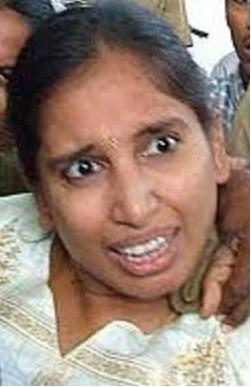
The sentencing of the three persons mentioned above has upset pro-LTTE groups. All three were members of the terrorist outfit and therefore this is to be expected.  Some object because they are against capital punishment. In Sri Lanka there’s been a deafening silence. The LTTE-loving TNA and other groups with eyes so ready to tear on account of debacles suffered by the terrorists have all kept their silence. How about the rest of us? What are we supposed to think?


Rajiv Gandhi

Rajiv Gandhi was no friend of Sri Lanka.  He wanted to ‘Bhutanize’ us.  He bulldozed into Sri Lanka to save the terrorists who his mother funded, armed and trained.  The LTTE did more than bite the hand that fed it, sure, but that’s not something that those who suffered at the hands of the LTTE would find cause to be sad about. 

When Rajiv Gandhi arrived in Sri Lanka on July 29, 1987 to ink the ‘agreement’ he had arm-twisted J.R. Jayewardene to sign (‘Can’t do uncle!’ was his dismissal of the Sri Lankan President’s plea to let Sri Lanka handle her own affairs), a Naval Rating, Vijithamuni Rohana De Silva, part of the ‘Guard of Honour’, lifted his rifle and brought it down on the Indian Prime Minister’s head. I remember that day. I was  trying to get from Gampola to Kurunegala after receiving a call from my mother, saying her father was seriously ill, but had got trapped in Kandy because a citizenry livid and frustrated at how Indian hegemony walked in and robbed our sovereignty, bailed out a terrorist and gave legitimacy to Eelam myth-making (Dayan Jayatillake called it ‘Geo-political realities’ then) had attacked and burnt some buses. I was forced to stay with friends and we watched the news.  We saw that attack.  We all felt sorry for Rajiv and at the same time empathized with his attacker. 

The three sentenced to be hanged, one can argue, did what Vijithamuni Rohana could not do that day.  If we can empathize with one, we can empathize with the other and that does not make either ‘right’.  Perhaps this is why Sri Lanka has been silent about the sentence.  We never cared much for the Nehrus (not for Rajiv, his mother or her father, the last having the gumption to complain that Sir John had not shown him the speech he delivered at the Bandung Conference of the Non-Aligned Movement) and also have very little patience or pity for terrorists. 

Still, if we can forgive V. Muralitharan aka ‘Karuna’, if we can forgive Prabhakaran’s notorious global arms procurement chief, ‘KP’, if we could have send food, medicine and other essential items to the people held hostage by the LTTE knowing very well that Prabhakaran’s thugs would rob left and right, if we could pay salaries to doctors, nurses, teachers, clerks and others in the Vanni and thereby allow Prabhakaran to claim he was running a de facto state, then we can and should forgive these three Gandhi-killers.

These three have erred.  Yes, there are erring degrees and their crime is pretty much up there among the most horrendous. Worse was done by their victim and his successors.  All that is irrelevant. They have not harmed anyone since they were arrested. They cannot harm anyone if they spent the rest of their lives in jail. Society needs to be protected from such people and if the containing facilities exist, then they should be used.


Nalini serving a life sentence at
Tamila Nadu Jail for her
part in the Gandhi assassination
It is 20 years since Rajiv Gandhi was assassinated (did someone say ‘got his just desserts’?).  A lot has happened since.  ‘An eye for an eye makes the whole world blind,’ Mahatma Gandhi once said. I’ve argued against capital punishment elsewhere and will not get into that discussion here.  If, as Vaiko claims, the hanging of these three individuals provokes a full blown secessionist struggle in Tamil Nadu, I will not stop cheering.   That’s not reason enough to want them hanged, though. 

The world would not become any safer or more dangerous the day after if they were executed.  Rajiv Gandhi will not be resurrected.  If India doesn’t know how to deal with them, send them over here, that’s what I say.

A lot of blood has been shed.  A lot of anger has been expressed.  A long time has passed.  There is a time to be wary, and a time to drop guard.  If India is scared about what these three individuals would do, then India can repatriate them back to Sri Lanka. 

I am not sure what their nationality is, but if they were LTTE cadres and were Indians, then they can be extradited to Sri Lanka.  We have rehabilitated and reintegrated into society close to 8000 ex-combatants, some trained to carry out suicide attacks, some trained to toss grenades and spray bullets on civilian cadres.  We can handle these three prisoners.  Not because we condone what they did, but because we know that more deaths will not change things and because we know that this is healing time and execution is not unguent. 

Courtesy: Daily News - Monday 5 September, 2011

04 September 2011

There’s more to cat-skinning that meets the eye

 A couple of weeks ago, I addressed a gathering at a book launch. Rajpal Abeynayake, who was present, wrote in his column last week, that I should be ‘a little bit more circumspect’ in saying that ‘post-war power-sharing projects in countries such as Sri Lanka are driven at least partially by the purpose of foreign interests seeking to commandeer, or at least pilfer, our resources’.  I didn’t use those words.  I make a distinction between power-sharing and devolution.  More on that presently.  As for ‘circumspection’, it is embedded in the qualifiers interjected, even in his representation of what I said.  Yes, there are many ways to skin the cat, and as he puts it, polarization of people to the point of conflict and armed confrontation is but one of these.  The choice of strategy is of course informed by ground realities.  If conflict can be fuelled and if fuelling conflict works, then why not try it?  If it can be done in smoother ways (I recall the US-friendly J.R.Jayewardene shamelessly say ‘Let the robber barons come!’ when he opened the economy and the nation to untrammeled value extraction), all the better.  For those who are in this to make bucks, that is. 

Conflicts cost, Rajpal is right.  Countries have to pocket out bucks for weapons and other hardware.  That’s one way of making bucks.  It doesn’t involve ‘digging, exploration, denuding of forests etc.’ as Rajpal points out.  Avoiding conflict therefore, he argues, makes sense.  And as Rajpal says ‘It’s a good reason to want to think about such things, when rejecting internal power-sharing arrangements out of hand’.  Rejecting out-of-hand anything is not intelligent.  Things should be embraced or rejected after considering the pluses and minuses.  Power sharing, as far as I am concerned (and as I have argued) is a good thing. On the other hand, there are many ways to skin the power cat too, so to speak.  In a political arrangement where power is overwhelmingly concentrated in the office of the President, clipping wings makes sense.  It can only add value to citizenship.  I am all for it.  In Sri Lanka, however, ‘power sharing’ has been erroneously made coterminous with devolution.  Now the argument can be made that devolutionary power-sharing should not be rejected out of hand, taking into consideration the kinds of theft Rajpal has elaborated on.  True, as I said, out-of-hand rejection is bad; rejection or acceptance must be backed by logic, backed by facts. 
There is nothing to say that refusal to devolve would re-invent conflict in ways that facilitated value-extraction.  Secondly, there is nothing to say that devolution will not create conditions for renewal of conflict via upping of demand.  We can’t dismiss the Chelvanayakam thesis (which I’ve referred to often enough) of ‘little now, more later’.  Devolution to the current provincial boundaries will most certainly fix the Eelam map and knowing well that Eelamists are great liars and are damn good at turning myth and fantasy into fact via propaganda, it would be silly to assume that they’ll close shop with devolution, 13 or 13 plus.  More importantly, devolutionary power-sharing should correspond to grievance, i.e. in their true dimensions and not those inspired by chauvinism-inflated fairy tales.   Not only does the demographic data rebel against devolutionary ‘resolutions’, there is nothing to say that other ‘grievances’ can only be resolved through devolution.  Also, the I-can’t-decide-my-future type of complaints are not the preserve of any single community, but cut across ethnicities.  Devolution of power fails the economic test too.  Most of the wealth in the country is created in the Western Province. Even if there was no one engaged in land-digging and sweat-robbing, wealth creators cannot be expected to dole out bucks after being told ‘you look after your province, we’ll look after ours’. 
Not too long ago, we were told that if we devolved, then terrorism would disappear.  That was tried.  Failed.  We were told, ‘you didn’t devolve enough’.  Rubbish.  Those who want to mess things up, take up arms, explode bombs etc., are not persuaded to desist by reason.  The best we can do is to be honest about realities and take it from there.  And this includes calling the Eelamist bluff, which, given reduced circumstances, has been watered down to the articulation of the Chelvanayakam Thesis referred to above.  
If self-determination and democracy is what it’s all about, then the focus should be on changing the structures that perpetuate the devaluation of the citizen.  There’s a lot of ‘polarization’ around and it’s not being talked about because the exaggerations of the Eelam Lobby have made it easy for their neglect.  Devolution is nothing more than a pandering to Eelam myth-making, unless we go for a wholesale re-demarcating of provincial boundaries to correct regional resource anomalies and complement such an exercise with significant constitutional amendments that win back self-determination for the ordinary citizen.  Repeating somberly ‘conflict will come, conflict will come’ amounts to surrendering to falsehood and buttressing the land-theft designs of Eelamists. 
In the end it is the wellbeing of the entire population that should matter.  In this, whether it is Dole or KVC that’s ripping off people does not matter.   It’s the ripping off that is relevant, not the ripper-off.  There is no point in bragging about securing the territorial integrity of the nation if things associated with the term ‘nation’, especially resources, get pilfered left and right within the ‘saved’ boundaries.  And it matters little if the thief is a foreigner or a local. A nation is no one’s private property.   I think there’s a lot of work to be done.  I think we can do without distractions. 

Courtesy: Sunday Lakbima News - 4 September, 2011