Showing posts with label Peter Roebuck. Show all posts

15 March 2016

Peter Roebuck is a decent cricket commentator

It was a different World Cup.  A different format.  Happened four years ago.  Peter Roebuck wrote a column.  And it had little to do with cricket.  Things have changed, but one wonders if Roebuck has.  In any event, there will always be Roebucks around and it's good to get a hang of who they are and what they do. This piece was first published in the Daily News (March 15, 2011). 

Peter Roebuck is a former cricketer turned newspaper columnist and radio commentator. A former captain of Somerset, Roebuck scored 17,558 runs in 335 matches including 33 centuries and 93 fifties. He had even captained England in a one-day match against Holland and was once (1988) named a Wisden Cricketer of the Year.

Peter Roebuck certainly has the credentials to talk about cricket. Reading what he has written for www.theage.com.au immediately after Sri Lanka beat Zimbabwe in a Group A match in the ongoing Cricket World Cup (‘Straightforward on the field, but it’s never just about the cricket’), one wishes that he did what he knows best, ie talk cricket.


He begins by saying that Sri Lanka’s victory indicated ‘the state of play in both cricketing dispensations but said little about the countries themselves’. Now that’s funny. England struggled to beat the Netherlands, tied with India, beat South Africa and was pipped at the post by Bangladesh in the matches completed so far and the results do indicate the state of play in the respective countries but not about the countries themselves. Goes without saying, Peter. Barring the occasional innovative stroke by an irrepressible maverick batsman, sledging and other forms of gamesmanship and of course match-fixing and spot-fixing, games are played within the rules and as such are ‘straightforward’. Such things don’t say anything about the countries themselves, good or bad.
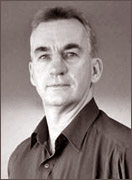

Peter Roebuck
Now if someone really wanted to comment on say the political economy of the Netherlands, he or she would do some background reading, interview a cross-section of key informants, spend some time walking around, taking stock etc. If you don’t have the time, energy and inclination to do so then the best would be to stick to what you can claim some expertise in, in Peter’s case, cricket.

This is what he says about Sri Lanka:
‘As far as Sri Lanka itself is concerned, the cure is, in some eyes, worse than the disease. On the surface, two things stand out - the number of soldiers on the streets and the cleanliness of those streets. Well-informed friends insist the peace is a facade hiding a government that allegedly fixed the elections with the help of IT experts from Iran, promptly imprisoned the Leader of the Opposition, the general responsible for crushing the Tamil Tigers and then set about controlling the media and fiscus. Certainly, critics and journalists have a perilous time hereabouts.’

His well-informed friends seem to have been short on facts and given to wild conjecture or else Peter has recorded it all wrong. The Leader of the Opposition Ranil Wickremesinghe was never arrested. The former Army Commander, Sarath Fonseka, played a key role in crushing the LTTE, yes, but he was not ‘responsible’ for the fact. He was one of several who had to work together to defeat militarily the world’s most ruthless terrorist outfit.


Heroism does not give immunity from the law, though and Peter who is supposed to have studied law at Cambridge University ought to know this. Regardless of whether political expediency played a role in what followed the election, Fonseka did constitute a serious threat to national security, a fact that Peter’s friends seem to have glossed over or else left out of the conversation.

There are soldiers on the streets, particularly close to World Cup venues. That’s nothing but authorities determined not to take chances. Remember Lahore. The fact is that Colombo has seen a gradual relaxation of security measures (soldiers, check-points, barricades and so on) since the LTTE was defeated. This too, Peter’s friends have failed to mention.

As for ‘fixing elections with the help of IT experts from Iran,’ Peter might as well have said aliens were involved. Critics have a perilous time, true, not because of any repression but because many of them have had close relationships with terrorists, operated in collusion with anti-Sri Lankan Forces here and abroad, engaged in fraud, benefited by millions of rupees pumped into their respective organizations by donors partial to the LTTE and so on.


I’d really like to know who Peter’s ‘well-informed sources’ are because I am pretty sure they are or are associated with the disinformation mafia whose activities prolonged conflict and helped legitimize the LTTE (for a while).

I would like to think that Peter was gullible and not mischievous, although it is hard to give such blank cheques to someone who offered to coach young boys with the catch that disobeying ‘house rules’ would result in corporal punishment and who in fact caned three such boys on their buttocks at different times and had to suffer a suspended jail sentence. Still, I would give Peter the benefit of the doubt and concede that there was no ill-will in his comments.

Only one thing would settle the issue though. Peter Roebuck is now required to talk about ‘things outside cricket’ in all countries playing any games he covers or comments on. He can start with England.

He could talk about the prison system. He could talk about foreign policy. He could talk about the illegality of invading Iraq, complicity and guilt in all manner of crimes against humanity in that country as well as in Afghanistan.

He could comment about how the British Foreign Office sent emissaries to do business with armed groups seeking to oust Muammar Gaddafi in Libya. He could also ask how the Chief Spokesperson of the LTTE (a proscribed terrorist organization) was allowed to headquarter in London for decades. Perhaps I am asking too much.


Malinda Seneviratne is a freelance writer who can be reached at malindasenevi@gmail.com

02 October 2011

Peter Roebuck on the brink

Some people like horror stories.  Some are doom’s day prophets.  Some write about things they know about. Some think that when they know something (e.g. some fact) about something (cricket, for instance), they have the right to strut around as though know everything about everything.  I am thinking of Peter Roebuck and his recent article ‘Sri Lanka on the brink’. 

Sensationalizing is an art.  ‘Whatever makes one happy’, is a way to respond to such thing.   Peter Roebuck has a reputation and therefore could do better than use his reputation and his slightly more than a smattering knowledge of cricket to sugarcoat what can only be called malice and ignorance.

The article sets out to analyze Sri Lanka’s cricketing future on the occasion of the appointment of Geoff Marsh as the new coach.  After some necessary and cursory accolades Roebuck starts to chew, ticking off all the negatives.  He is correct.  There are off-field controversies, the natural ups and downs of an outfit in the process of rebuilding after the retirement of exceptional performers and so on.  He throws in Kumar Sangakkara’s much-celebrated comments to underline his conclusions.  All good, all good.
On the other hand, though, it is not as if Sri Lankan cricket’s success or failure is dependent on the health of the island’s cricket administration.  There have been more interim committees than regularly elected bodies and the nature of the administration has had little bearing on what happens on the field, in terms of success/failure that is. 
Indian cricket is always embroiled in some controversy, but the team is still among the top in the world.  England, South Africa and New Zealand have cricket boards that are largely free from controversy, but has this translated into consistently superior on-field performances?  None of these teams have won a World Cup. South Africa and New Zealand are yet to reach a final and England hasn’t shown any sign of making it in more than two decades.  What this means is that Sri Lankan cricketers have something special about them which allows them to be unaffected by off-field controversies, right Peter?
Intrigue regarding team selection there always was and always will be, not just in Sri Lanka but elsewhere too, but there is a lot of room for improvement of course and that point is valid.  
Sri Lanka, he laments also, is being led by its third best captain.  Now that’s a big claim, considering that Tillekratne Dilshan hasn’t really had the time to demonstrate skippering credentials.  India once had 4 or 5 former captains on board, all led by a younger skipper.  Sri Lanka doesn’t lack in talent or determination.  Sanath Jayasuriya was not the best ‘leader’ on the field when he became captain.  Arjuna Ranatunga and Aravinda De Silva were certainly known to have better skippering credentials.  Hashan Tillekeratne too, while one could not rule out Chaminda Vaas or Muttiah Muralidharan, given experience, longevity and cricketing knowledge, not to mention the respect they enjoyed from their team mates, seniors included.   
Stephen Fleming (New Zealand) and Graeme Smith (South Africa) were wet-behind-the-ears when they were asked to captain their respective teams.  I can’t remember Roebuck dissing either at the time.  Pooh-poohing Dilshan is therefore a bit whacky, to put it mildly.
If things national (the baddies enumerated by Roebuck for instance) impact players, then the ‘goodies’ must too.  Like the resilience and single-minded determination that helped deliver a comprehensive defeat on the world’s most ruthless terrorist organization.  A slip in the rankings can be explained in many ways and as Roebuck points out the chaos in the administration has not helped.  This doesn’t explain why England has for years languished in the middle and lower part of the rankings nor New Zealand’s consistent just-above-Bangladesh status. 
Geoff Marsh has taken on a challenge, Roebuck is right all things considered.  Dev Whatmore and the other Aussie coaches who came before had the same kinds of issues to contend with.  They delivered and there is no reason why Marsh will not.   So we can conclude that while Roebuck makes some points, he fudges a lot too.  I would give him a B Plus for his assessment. 
Roebuck does know something about cricket, that’s why people read him.  That’s where he should stop too, for his knowledge of history, geography and politics is abysmal, going from what he has written about Sri Lanka’s ‘situation’ in this very same article.
He states "Sri Lanka can be inward-looking, and sensitive about intrusion from other countries, especially India, and including the West, whose condemnation of the cruelty that marked the closing stages of the civil war (and afterwards) is resented."  Now on what basis has he come to this conclusion?
First and foremost, no one condones cruelty.  But what is this ‘cruelty’ that Roebuck claims ‘marked the closing stages’ of what he calls (inaccurately) a ‘civil war’ and, lest we forget, ‘afterwards’?  Does he not know that over 4000 security forces paid with their lives to rescue close to 300,000 people who were being held hostage by the world’s most ruthless terrorist outfit?  What’s the cruelty in that?  Is he by any chance referring to the fact that the hostage-takers shot hostages at point blank range as they tried to flee and reach safety, with, mark, the security forces of the Sri Lankan State? 
Does he not know that in the before, during and after of the operation the Sri Lankan State continued to send and to facilitate the sending of food, medicine and other essentials to terrorist-held areas, knowing very well that the terrorists would pilfer most of it and distribute the rest as though it was engaging in charity? 
Does he know that almost all those displaced have now returned to their homes and to infrastructural facilities they had been denied for decades courtesy the wanton destruction by the LTTE?  Does he know that in the IDP camps, where they were resident until the Army cleared thousands of square kilometers of land of landmines buried by the LTTE, they were treated like no IDPs anywhere in the world were treated, with food and medicine, water and care, counseling where necessary and with all arrangements put in place so children could learn and sit for examinations?
Does this man know that of more than 10,000 hardcore LTTE cades captured or surrendered, more than 8000 have been rehabilitated, given skills and reunited with families and reintegrated with society?  Does he not know that over 500 child combatants abducted and trained to kill by the LTTE were quickly reunited with their parents and families so they could recover their childhood and dreams? 
There is no resentment about wild allegations, Peter.  Just pity at ignorance. 
Most important, however, is the strange fact that Peter Roebuck is blind to what ‘The West’ has been doing in terms of ‘cruelty’ in almost all parts of the world, but most particularly in Iraq, Afghanistan and Libya in recent times.  How about ‘being cricket’ as per the saying ‘that’s not cricket’, about the West, Peter? 
He says a lot needs to be done in the country.  Yes. In all countries, especially his. Agreed?
Let’s try this.  Let Peter talk about cruelty in India and Pakistan. Let him educate us about Kashmir and how NATO is going about handling ‘terrorists’. Let him tell us how Britain is batting in Libya, partnering Uncle Sam.  Let him tell us about Australia’s racist laws and criminal treatment of the ancient people in that country that was captured by a set of English thugs and peopled by English criminals.  Will he? 
I am not sure.  Maybe he does not have those things that are tossed around the cricket field so necessary to take on such a task. 
As for us, we have our tumours and thanks Peter for pointing them out.  We will try to do our best.  I have no doubt that Dilshan and his boys will brush aside the negatives when they stride on to the field.  We cheer them all the way, venerate them when they win and are sad when they don’t. We don’t burn their houses or toss bricks in their direction.  That’s something now, isn’t it?