Showing posts with label Errol Alphonso. Show all posts

11 February 2023

So what if the best flutes will not go to the best flautist?


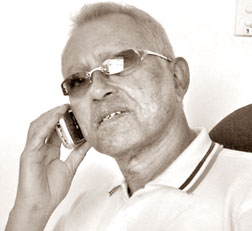
Errol Alphonso was a friend and mentor. I was also his guardian in his last days, putting down that title in black and white to help sort out a thorny problem at the home for the elderly where he was a resident at the time. Errol, a voracious reader who had in his early years wielded a prolific pen, had the Aristotelian hope that someday the best flutes will finally go to the best flute players, and that he’ll end up, consequently, with a swank shop laptop.

He's been gone over a decade now. If he was around maybe he would have wished for something else. We do know and he would have agreed that the best flutes don’t often go to the best flautists.

The best flautists don’t always have the means to purchase the best flutes. Neither is it that they have patrons who would provide them such. Indeed it could also be that the best flautists are unknown.  

I don’t know if there’s a ‘best flute’ in this world. Maybe there are better ones and maybe the better flautists get them. At least, the better flautists would know the difference. And Pundit Hariprasad Chauraisa, for example, would have played the best flutes ever made.

But what got me thinking about flutes and therefore Errol and his hopes is a short poem by Palitha Senaratne in his collection ‘Haiku Mohotha (Haiku Moment).’

Until someone
a sweet melody plays
the flute is but bamboo shaft
with hollow holes


There are things like that in this world.

Years ago, in Dupont Circle, Washington DC, as I sat sipping coffee with a friend, a young man arrived with cans of all kinds of sizes. He rigged up some kind of stool, arranged these cans around him. He turned pieces of plastic into a set of drums. The percussionist not only caught people’s attention, but won their admiration as well. A passerby stopped and started dancing. My friends joined her. They were joined by others. Just a set of cans and a human being, but in combination they made people dance and they were all happy for a while.

Now I don’t know if our ‘drummer’ was the best percussionist or at least one of the best, for I know very little of drums, rhythm and music. I don’t know, therefore, if he deserved the best drums. I don’t know if the ‘instruments’ he played were the best drums or less than average drums in terms of quality. I don’t know if they were the best instruments or the worst for what he wanted to express or whatever outcome he preferred and worked towards.

I do know that they were plastic cans, some big and some small, the different sized obviously yielding different sounds. I know that if left alone there wouldn’t be any drumming sounds. There wouldn’t have been any dancing at Dupont Circle.

He probably made do with what was available. At that moment. I don’t have a clue about the subsequent trajectories of his life, drums, music and intentions. He could have waited for the right or best drums. He may have got them some day. What matters is that he saw, so to speak, a piece of bamboo, carved out some holes and used lips and lungs to coax music out of it.

Not all plots of land are fertile, but soil can be ‘built.’  Not all land is blessed with abundant rainfall, but even the driest pockets of a dry zone can be turned into a zone wet enough for cultivation through water conservation and irrigation.

That which is lost can be recovered. That which is laid waste can be resurrected. The best farmer finds a way. The less-than-best-farmer is not doomed to starve. The best student doesn’t always get the best teachers, but a good student will learn nevertheless.

There are those who sing beautifully. Not all of them are given a stage, orchestra and an audience. Should they not sing, then?

What’s around is seldom ‘enough’ and therefore it is necessary to make what’s there ‘enough.’

Errol Alphonso never got a swank shop laptop. He still wrote. Beautifully. He wasn’t a lecturer in some media school. He still taught. His Aristotelian hopes never materialised. He didn’t lose any sleep over such ‘disappointments.’

I don’t know if Errol ever took any music lessons or had any voice training. He still sings to me. 

 ['The Morning Inspection' is the title of a column I wrote for the Daily News from 2009 to 2011, one article a day, Monday through Saturday. This is a new series. Links to previous articles in this new series are given below]

Other articles in this series:

There's dust and words awaiting us at crossroads and crosswords

The books of disquiet

A song of terraced paddy fields

Of ants, bridges and possibilities

From A through Aardvark to Zyzzyva 

World's End

Words, their potency, appropriation and abuse

Street corner stories

Who did not listen, who's not listening still?

The book of layering

If you remember Kobe, visit GOAT Mountain

The world is made for re-colouring

The gift and yoke of bastardy

The 'English Smile'

No 27, Dickman's Road, Colombo 5

Visual cartographers and cartography

Ithaca from a long ago and right now

Lessons written in invisible ink

The amazing quality of 'equal-kindness'

A tea-maker story seldom told

On academic activism

The interchangeability of light and darkness

Back to TRADITIONAL rice

Sisterhood: moments, just moments

Chess is my life and perhaps your too

Reflections on ownership and belonging

The integrity of Nadeesha Rajapaksha

Signatures in the seasons of love

To Maceo Martinet as he flies over rainbows

Sirith, like pirith, persist

Fragrances that will not be bottled 

Colours and textures of living heritage

Countries of the past, present and future

A degree in creative excuses

Books launched and not-yet-launched

The sunrise as viewed from sacred mountains

The ways of the lotus

Isaiah 58: 12-16 and the true meaning of grace

The age of Frederick Algernon Trotteville

Live and tell the tale as you will

Between struggle and cooperation

Of love and other intangibles

Neruda, Sekara and literary dimensions

The universe of smallness

Paul Christopher's heart of many chambers

Calmness gracefully cascades in the Dumbara Hills

Serendipitous amber rules the world

Continents of the heart The allegory of the slow road


04 March 2015

Reflections on the Water-Haiku of Shree Padre

A reference to a Haiku poem in a recent article provoked my friend Errol Alphonso to unearth a fascinating and multi-layered gem from the vast storehouse that is his memory. He spoke of the Haiku master Matsuo Basho, widely acknowledged as the greatest poet of Japan’s Edo period in the 17th Century.  I had never heard of Basho.  Errol said that in the year 1969, he had read how Basho taught one of his pupils the art of Haiku as they walked among black pepper vines. 

The pupil had said, ‘Pepper pods take on wings and become dragonflies.’

Basho had disagreed: ‘If you want to make a real Haiku out of it, you should say, “Dragonflies shed their wings and become pepper pods.”’

The inversion makes all the difference in aesthetic terms.  The exchange of clothes or body parts calls for pause and reflection.  The exchangeability itself empowers because of possible replication as well as extrapolation.  

Coincidentally, I received a communication from a man called Shree Padre, a journalist turned evangelist for rain water harvesting.  Inspired by the travails of arecanut farmers in Karnataka to start a magazine that would help them communicate with one another, Shree Padre’s ‘Adike Pathrike,’ launched in 1988, now boasts of a readership of over 75,000.  The Basho connection, at least to me, was in an initiative of the magazine to collect information about water conservation techniques. 

In 1995 Adike Pathrike started a series on ways of conserving water, grandly titled ‘A 100 ways to save water’.  Padre expected a deluge of write-ins.  He was astounded by the drought.  Inquiries revealed that relevant government departments had little or no information about the subject. He handed over the business of running the magazine to others and devoted all his life to propagating water conservation, documenting local as well as foreign methodologies.   It is reported that Padre ‘drowned in the subject’. 

‘My own farm has 'surangas', man made caves on the hill side into which water drips, forms a shallow pool and flows by gravity into my farm. In many farms 'madakas' --which are strategically located percolation tanks -- have been abandoned. In Ahmedabad, there were 10,000 'tankas' or huge basement storages that are now in disuse. In one they recently found water that was 50 years old-- when tested it was found perfectly potable.’

Padre asks a question: ‘Why have we suffered such a disconnection with sustainable ways?’  Padre makes an observation: ‘We seem to have developed a perverse notion of 'modern science' and lost our esteem for proven, sustainable methods.’

In the clash of civilizations, the shedding of blood to placate a self-confessed jealous god, the plunder of resources, wanton desecration and indeed razing of places of religious significance, destruction of livelihoods and fracture of communities, the cruel intruder did not say no to complaint, but spared no pains nevertheless to ensure that the primary articles of faith remained untouched or at least unscarred: modernity and science. 

Somewhere down the line we’ve shed our ability to see and started inhabiting someone else’s version of our reality.  We let ourselves be blinded to that which we have, our resources, the sources of our resilience, the values and customs that made and sustained a civilization and all of a sudden we find ourselves confronted by scarcity, incapacity, poverty and a terrible lack of imagination. 

I have nothing against pepper or pepper pods and prefer butterflies to dragonflies.  I think that it would be fascinating to replace dragonfly, wing and pepper pods with other things that can be similarly clustered.  We could say, for example, that culture was painted with ‘quaint’ and turned into and artifact to help fill the British Museum.  Or, conversely, that the British Museum descended here, saw culture, said it is too heavy for people to carry and took it all away given the prerogatives of ‘White Man’s Burden’.  The possibilities are endless, aren’t they?

Basho’s line is neat and positive.  Life is a mixed-bag though.  There may very well be giving dragonflies, but certain wing-clips are not about sacrifice but dismemberment.  Some people’s lives and life chances improved at the cost of the impoverishment or even massacre of others. 

It is not just physical extraction only that we are talking about.  Padre’s observation indicates a certain learned, cajoled or thrust-down-throat inabilities, myopia, memory-loss and ‘tongue-tiedness’ of the mind.  Needless to say this inhibits communication and therefore sharing. 

Maybe things have been misnamed and their constituent elements scrambled and mixed up with one another. Perhaps this is why the misnaming and rearrangement embedded in the Basho proposition is so empowering. It persuades us to question the arrangements before us which we think or have been made to think are ‘natural’ and therefore best left untouched. 

Sometimes the eyes and mind have to be nudged or jerked out of lethargy, made to open, forced to recognize dragonfly wing as dragonfly wing, pepper pod as pepper pod.  Perhaps then we might recognize that someone’s been pinching someone else’s clothes, someone’s robbed someone’s water and that we have been robbed of our bearings or willingly divested ourselves of the same out of ignorance and remain bereft out of arrogance. 

The most pernicious scarcity, perhaps, is the abdication of the critical faculties. We just don’t think, do we?  It is not that brain-water hasn’t fallen. It is not that we cannot conserve it.  The harsh sun that has ‘dried up’ our reservoirs is not resident in the sky but in our minds.  So too the water that will quench centuries of collective thirst.  That’s what Basho is saying I think. And that’s what my new friend Shree Padre proves with his work. 


Malinda Seneviratne is the Editor-in-Chief of ‘The Nation’ and can be reached at msenevira@gmail.com.  This article was first published in the ‘Daily News’, March 1, 2011.  Errol Alphonso is sadly, no more.  He was a wonderful man.  Read: And skylarks will not be silenced by order or deceit, Did you say hello to Errol Abu al-Mughith Husayn Mansur al-Hallaj Alphonso? and  Errol Alphonso my friend and benefactor.

27 February 2014

And skylarks will not be silenced by order or deceit


I've written about people I've known, people I've encountered, random people marked by random incident.  Some I've written about many times, not because other lives inspire less but that they have for one reason or another been 'present' more frequently.  Errol Alphonso, for example.  This was from three years ago, first published in the 'Daily News' to which newspaper I wrote a daily column titled 'The Morning Inspection' for a little over two years between 2009 and 2011. 

Errol Alphonso, my friend and benefactor, rarely calls me.  He did, recently.  He was gasping for breath and were barely audible.  He called to say ‘goodbye’.  He said ‘I don’t think I am going to make it’.  In what he believed was his last few minutes on earth, Errol called me just to tell me not to pick up the phone if I got a call from someone from the home for the elderly where he is currently a resident.

‘I don’t want you holding the can.’ 

Errol pulled through. He had got a call through to a doctor who had arrived not long after the line went dead.  I was relieved. 

Errol is the most e-savvy 70 year old I know.  A voracious browser of the internet, Errol has the knack to pick the most pertinent and best argued pieces on any particular topic.  In many instances he’s directed me to sources and information that I have found invaluable.  He knows words, Errol does.   He is a word seeker.  I sometimes feel that he has dedicated his life to vocabulary-expansion.    He’s interested not in words and meanings along, but etymologies and applications, onomatopoeia and metaphor-potential. 

He sends me words, almost every day.

He sends me words and he sends me quotes.  He’s a quote-giver. In fact, as I was writing the above paragraph I received an email from him.  A quote. 

‘Do not interrupt the flight of your soul; do not distress what is best in you; do not enfeeble your spirit with half wishes and half thoughts. Ask yourself and keep on asking until you find the answer, for one may have known something many times, acknowledged it; one may have willed something many times, attempted it — and yet, only the deep inner motion, only the heart's indescribable emotion, only that will convince you that what you have acknowledged belongs to you, that no power can take it from you — for only the truth that builds up is truth for you.’

The quote is attributed to someone called Søren Kierkegaard.  Never heard of him/her.  So I checked the internet. It’s a ‘he’. Kierkegaard was a Danish Christian philosopher, theologian and religious author who lived and wrote in the early 19th Century. Wikipedia says that Kierkegaard’s philosophical work highlights the importance of personal choice and commitment.   

It’s the respect that I have for Errol’s intellect and integrity that made me read the quote and explore further.  He does that often.  If he finds some grammatical error in something I’ve written or suspects that I have not mastered some grammar rule, he would send me a link that enlightened me.  Errol’s English lessons are quite charming.  He slips them into my inbox without referring to the particular error or rule.  He doesn’t tell me why he picked that particular moment to send that particular link or message.  

Errol is a craftsman, a refiner of the crude, polisher of rough edges.  This is why I always copy my articles to him when I fire them off to the particular editor.  If they are sent early enough, Errol goes over them meticulously. There are invariably many errors. He picks them all from the comma that should be semi-colon to the awkward sentence.  If I get this done quickly enough and he happens to check email, I have no doubt he will send it back with lots of ‘corrections’.  

And it is not only grammar.  Errol makes things read better, by suggesting word addition or sentence deletion.  Thereafter, if he came across any material that he believes would help enhance my knowledge of the subject, or was capable of provoking fresh insights, he would point me to it.  

His quotes could be random pickings, but I doubt it. Errol is a teacher, and one who knows how to rap knuckles without seeming to do so. When I started writing this morning, I wanted to play with a quote that Errol sent me a few days ago.   The one I copied above is related, and could be seen as an elaboration. Both empower. Both are humbling.  And both speak to the courage of a man who overcomes the constraints of situation by keeping his mind alert and his heart young.  
I have never encountered someone with so little to call his own who gives so much. 

The quote I wanted to write about but which is an essay that has to be postponed or left unwritten, is one attributed to Khalil Gibran, ‘You can muffle the drum, and you can loosen the strings of the lyre, but who shall command the skylark not to sing?’  That was a personal note, a comment on a particular situation and a word of encouragement as well. 

I will not write that article.  It’s already been written.  Errol Alphonso cannot be asked not to sing.  He was a skylark even as he mumbled into a mobile phone what he truly believed were his last words.  Still is, I am happy and relieved to report.   

Malinda Seneviratne is the Editor-in-Chief of 'The Nation' and can be reached at msenevira@gmail.com

25 February 2014

Did you say hello to Errol Abu al-Mughith Husayn Mansur al-Hallaj Alphonso?

[This was written almost four years ago.  The original title was 'Say hello to Errol Abu al-Mughith Husayn Mansur al-Hallaj Alphonso'.  He's passed on. I remember him often, this wonderful man who taught me so much.  I want to share him with those who did not know him. Hence this re-post]


Mansur al-Hallaj Alphonso
Abu al-Mughith Husayn Mansur al-Hallaj, a Persian mystic, revolutionary writer and teacher of Sufism was condemned to death for heresy at the orders of the Abbasid Caliph Al-Muqtadir and was duly executed on March 26, 922. His crime was the uttering of the blasphemy, ‘An-ul Haq, An-ul Haq’ (‘I am the Truth, I am the Truth’, interpretable as ‘I am God, I am God’). Mansur was merely proclaiming a total disavowal of self in the throes of his sublime spiritual ecstasy, some say. He could also have been merely noting the simple truth that if God is indeed omnipresent, then God must reside within him as well. 

I am an atheist and convinced that ‘god’ and ‘devil’ are human and social constructs that have fairly clear-cut functional purposes, and are but metaphors that have got waylaid by the manipulative and thereafter invested with powers and values beyond original intent. I believe that the true and final residence of god and devil is self, that the human being is in the final instance the refuge of both good and evil, of right and wrong, teacher and student, hero and villain, lunacy and lucidity, wise and moronic. Mansur was killed for saying this. We live in happier times.

It is 5.26 am right now. Mansur came to my thoughts at this pre-dawn ungodly hour because I had seen him the previous morning. I see Mansur all the time and you can see him too in every person you meet on your way to work, in your co-worker, your child, your employer, your employee, your loved ones and your detractors, enemy and friend. The Mansur I am speaking of comes to me as word and comment almost everyday via the internet. He has another name. Errol Alphonso.

Abu al-Mughith Husayn Mansur al-Hallaj aka Errol Alphonso, aka Errol Abu al-Mughith Husayn Mansur al-Hallaj Alphonso, is not on death row, although he does claim that Death Row is the name of the home for the elderly he has been living in since February 2001. He was 60 years young then and is even younger now. He claims that a woman, according to him a nymphomaniac, who has been harassing him in one way or another for years and years, almost got him a quick ticket out of that living/dying hell within six months of his entry.

His words: ‘This woman, together with the eighty something man who was her drooler here, and continues to drool in his bed elsewhere now at middle ninety, and several of the other supposedly sane women in residence, worked up a good enough head of steam to give me a whumping big cardiac blow within six months of entry. My insanity brought me out of it with 60 percent of my heart left in San Francisco. I haven’t had any cardiac check since then, and take the drugs prescribed at that time, which were meant until death do us part.’

See, Errol knows words. He doesn’t know mincing. I got to know Mansur Errol about a year ago. He commented on something I wrote. Since then we’ve met several times and have had wonderful conversations. In the main, though, it’s been mostly an edifying e-mail communication experience for me. Mansur Errol comments. Corrects. Points me gently and without appearing to be teaching towards things I am ignorant about. I read him carefully. I learn and learn and learn.

He is 69 now. He’s had a wide expanse of experience in mass communications and marketing. He has been rated ‘the best’ by Sri Lanka’s Dean of Broadcasters, the late Livy Wijemanne. He has done his hours in advertising, ground up. He’s a ground-up person in all things, I might add. A voracious reader and a veritable super-sucker of what the internet offers and at rates that one would usually not associate with someone of his age. Errol has seen the world. He’s been to Singapore, Bangkok, Hong Kong, Tokyo, Yokohama, Osaka, Hamamatsu, Kofu, Honolulu, Los Angeles, San Francisco, Washington D.C., Philadelphia, New York, London, Paris, Rome, Brussels, Antwerp, Ghent, Amsterdam, Frankfurt, Dusseldorf, Idar-Oberstein, Beirut, Kuwait and Tehran. He’s come home, like all prophets, to find the truth (of his heaven and hell).

One of these days, Mansur Errol will die. Like all of us. He is conscious of his mortality. He is a rationalist (on his door is pasted a copy of the ultimate Charter on Free Inquiry, the Kalama Sutra). 

He will pass on and no one will know. His story will die with him.
He is alive now and I wish him a long and healthy rest-of-your-life full of engagement, resolve, colour and the soft ways that have made him the hero that he is, the divine entity whose knowledge and lucidity astound me all the time.

Errol Mansur Alphonso has an Aristotelian hope; that someday the best flutes will finally go to the best flute players, and that he’ll end up, consequently, with a swank shop laptop. You might never have seen him, but he might have touched you through Fanfare for the Common Man, The Unimportance of being Blind, Shakespeare was a Scriptwriter, Contemplations on a Cardinal Sin, Making Love in Many Languages and Geneva Ticks!

There’s an Errol you are going to be passing a few minutes after reading this. Nod your head in acknowledgment. You are going to be him/her a few years from now. Well, perhaps not a fraction as worthy and (hopefully) not having to suffer the agonies of residency in an institution run by the vindictive, insensitive and petty, but hey, who can tell in these things, these times, there where and why of our being and dying!

Go well, Errol. Carry your immortality light on your shoulders. 

msenevira@gmail.com