Showing posts with label Ruwan Bandujeewa. Show all posts

02 January 2026

Nandani Warusavithana’s sorrow

[Disclaimer: neither I nor Ruwan Bandujeewa know of a Nandani Warusavithana. If such a person does exist, please note that none of what follows has anything to do with her. It was a random name that the poet, Bandujeewa, came up with perhaps in the part-delirium of a persisting fever sometime in March 2025]

I’ve mostly met Ruwan Bandujeewa at the ‘Kavi Poth Salpila’ run by poet, novelist and publisher Mahinda Prasad Masimbula. That’s at the annual Book Fair. That’s the only stall I visit and I do so because for many writers, especially poets, it is a meeting point. I know that I will meet a few, whatever the time of day. We talk. I cherish the conversations because I always learn something from poets, especially those writing in Sinhala.

So we talk. Have tea.

We meet randomly at book launches, either at the Library Services Board auditorium or the Mahaweli Centre. Talk. Tea.

It is rare that we plan to meet. We did last week. At some point he told me about Nandani Warusavithana. Yes, the fictional character. I asked him how he came by that name. He laughed, almost in embarrassment, and said he did not know.

Here’s the context. As mentioned, he had a fever that kept him home for several weeks. On a whim, he had explored AI and tried his hand at fusing African and Chinese music. As he fiddled around he discovered that he could ‘sing’ as in, he would voice some words and the engine would generate melody and music. It would correct the obvious flaws of rendition. So he had written a few songs.

One was about the palaa-pala of moonlight, drawing from the superstitions related to geckos, i.e. what is portended by the place on the body that a gecko might fall. In Sinhala it is referred to as hoonu-palaa-pala or simply hoonu-saasthara. ‘Moonlight’ was the poetic twist. If it fell on the right eyebrow, what would it mean? If it fell on the shoulder, then? Such questions he answered in the song. I told him that he could publish a collection of these fever-day songs and call it ‘handa-eliye palaa-pala.’ He laughed.

Then he mentioned Nandani Warusavithana. Here goes:

Having visited Dambana
and met the ancients there
she noted they weren’t ancient enough for her
Miss Nandani Warusavitharana was inconsolably distraught

At the elephant orphanage
since not a single elephant smiled at her
Miss Nandani Warusavitharana was inconsolably distraught

At the museum
upon seeing a taxidermy mount of a bear
weeping like a female bear that had lost her cubs
Miss Nandani Warusavitharana was inconsolably distraught

At the planetarium
unable to find in the sky
that one star she loved the most
Miss Nandani Warusavitharana was inconsolably distraught


Simple stuff. Hilarious too. And that’s how this ‘works,’ at least for me. It reminded me of a conversation I had with my Grade 6 class teacher, Sunimal Silva. I wasn’t his best student but not the worst either. I did nothing noteworthy in that Grade 6 classroom.

Anyway, more than thirty years later, I happened to take my daughters to the school’s swimming pool because I had heard of a coach who was kind and grandfatherly. It was him. We had met many times over the years, so the recognition was immediate.

‘Are these your daughters? I will coach them!’

I didn’t even have to ask.  

‘Is this your wife?’

So I made the introductions. Then he declared, in Sinhala, ‘of all the students I’ve taught throughout my career as a teacher, he is the one who did absolutely nothing with the skills he had.’

I couldn't help but smile. That was the way he expressed affection, I now feel. And now, thinking of that moment, it occurs to me that Sunimal Sir actually believed I had skills.

I just responded, ‘sir, aathma thrupthiya neveida vadagath vanne (isn’t contentment what matters most)?’

His tone and demeanour changed immediately: ‘ow, ehemanam hariyatama hari (yes, if that’s the case, it’s all good).’  

I think I was just being clever. Somehow, over the years, I had acquired some decent level of competence when it comes to repartee.

Nandani Warusavithana is a random name that came to my friend from who knows where, but her grief is common to us all to the extent that we are enamoured with expectations, the splendour that’s in the advertisement but is less than promised, and sense of the exotic in place, artefact and love that is anticipated with such relish but disappoints and the promised land that’s non-existent.  

Contentment. That seems to be the key factor.

In Uruvela, a long time ago, the Buddha Siddhartha Gautama, elaborated on this to the Kassapas. It’s in the Santuáą­áą­hi Sutta (ref the Anguttara Nikaya or the Numerical Discourses of the Buddha).

‘When you’re content with what’s blameless, trifling, and easy to find, you don’t get upset about lodgings, robes, food, and drink, and you’re not obstructed anywhere,’ the Kassapas were told.

Not becoming agitated is what it is about. For example if a monk does not get a robe he should not be agitated, and if he does get one he should use it ‘without being tied to it, un-infatuated with it, nor blindly absorbed in it, seeing the danger in it, understanding the escape.’

Do we? Can we? Miss Nandani Warusavithana couldn’t. Her fascinations were mild, ours may not be. Ruwan Bandujeewa, as usual, touched a nerve. And laughed about it. At himself, at me, at all of us. I am enriched. Fascinated. Time to ‘see the danger.’ Time to stop.


25 December 2025

Christmas with Timran Keerthi and Ruwan Bandujeewa


Ruwan Bandujeewa and Timran ‘Tima’ Keerthi are among the finest poets of their generation. Tima lives in Ratmahara, somewhere close to Guriulla. Ruwan lives in Kolamunna, near Piliyandala. I did not have Christmas plans. I don’t, usually. I wanted to meet Ruwan simply because we are in the midst of getting a translation of his collection, Meelanga Meevitha or ‘The wine hereafter’ printed. Technical things needed to be sorted out.

Ruwan is busy with a teledrama he is writing even as some episodes or scenes are being filmed. Being a holiday, I figured he would be at home. He was. He simply informed me that Tima had also come to work on the script.

They told me about their writing struggles in this teledrama business, which was new to them both. They were quite impressed by a few short poems from Pablo Neruda’s ‘A book of questions’ I had translated into Sinhala. It meant a lot to me.


Why don’t immense airplanes
fly around with their children?


They had OMG looks. Ruwan kept repeating the Sinhala translation. Tima was cracking up.

Why don’t they train helicopters
to suck honey from sunlight?


Pause. Again.

So they encouraged me to complete the translation. I informed them that I was translating from the English translation from the Spanish original, and that Indrani Ratnasekara is probably the only person in Sri Lanka who could certify fidelity.

Ruwan’s wife, Nishadi, served coffee, replenishing every now and again. A young man and woman arrived, the former a cameraman also involved in the teledrama, ‘Mal bicycle’ (Flower bicycles), and the latter, she said, makes documentaries. Ruwan repeated those lines from Neruda. They were impressed too.

More coffee. More conversation. They laughed at their trials and tribulations, poverty and  incompetency. And thus enriched me.

Tima’s second collection, ‘Yannang Chandare’ or ‘Au revoir Chandare’ won the State Literary Prize and the Godage Prize for poetry in 2014. Ruwan offered that Time’s ‘E jetteke giye samansirimayi’ (It was Samansiri, certainly, who flew in that Jet) was the best or rather was ‘something else.’ I remembered writing about that book some years ago. Ruwan had a copy. I read or rather browsed.

Let’s build a nest, it will not be forever dark
life is beautiful the more troubles come our way


That’s the how the last poem begins. Timran’s original is rhymed, this is not.

Vagrant, true, the beauty of squalor
it’s close at hand is it not, the day you will carry me?


Again, rhymed, unlike the translation.

Let us be thus until death, the love was such
believe me, never have I felt love this much

There are other lines of course but this is how it ends:

True, I have not felt this much love
many other things did she say
before the arrival of cancer.

Floored me. Once again.  

So I returned to the title poem. It was about a childhood friend who made paper airplanes.
 
Teachers only knew of white men who built jets
Father talks of Ravana
I know all about Samansiri.

This is the thing:

It was Samansiri
certainly
who flew in that jet.


Made me fly. Once again.


Now I sit here, in the open space in this enchanting house. There’s birdsong. Sunlight reflects off the walls and streams in through the crack of a slightly open window which has also allowed a grape vine to crawl in. The others left leaving Ruwan and Tima to get lost in the labyrinth of plot twists, character development and visual treatment or whatever it is that scriptwriting is about. 


More coffee. Naturally.  

Soon there will be lunch. We didn’t sort out the technicalities related to Meelanga Meevitha. Ruwan scribbled a note to himself. I told Nishadi to remind him. There are more important things to attend to. Like just being here. In this place of simple ornaments, vines and ferns, book shelves, and the archaeological extracts of the residents’ ways of being.

Ruwan has gone downstairs to check about lunch. Tima is sitting in front of me at a table. There’s an old water filter. It could be functioning or could be frill. He is rubbing his forehead. Was. He stretched himself out on the long bench where the two poets were discussing the work at hand a few minutes ago.  

Birdcalls blend. Plants grow slowly. A dream catcher hangs on the wall. Functional or decorative, I cannot tell.

No bells. No Christmas tree. No Santa Claus. But here I am with two young poets, always ready to laugh even as they tremble at the lives around them and the worlds they are forced to inhabit. They shall be comforted. They shall inherit the earth. They shall obtain mercy. They shall see god. They are the children of god. Theirs is the kingdom of heaven.

At some point I read another line from the Neruda book:

Those who have not touched my blood
what will they not say about my poetry?


They received this with utmost sobriety.

Ruwan Bandujeewa and Timran Keerthi are poets I know and adore. They delight me no end. They made this day. A Christmas of a kind. Memorable. 


06 December 2023

Love-residue on benches that have disappeared


I am fascinated by seats of any kind including parapet walls and steps on which you can sit and watch the world age and regenerate.

It’s the same with roads, especially byroads, un-tarred and uneven including tank-bunds. They make me think of absences, people who have been there, have walked, conversed, reminisced, planned, were distraught or elated. They make me wonder about who would come later and whether their thoughts would be, in essence, similar to that which has crossed other minds in another time.

Benches are special though. They can’t hold many people. Two, best. Three’s a crowd for the architecture makes conversation awkward. Two, best. Especially if for those seated the world is made of and made for love.

It is not always a happy place of course, for the course of love is seldom smooth. Love is a poem, after all, that is inked with a smile and a tear. Benches know of such things, I am sure. They may not know the names of those who sat, spoke and were silent, but they know the language of words, of love and the more eloquent tongue, silence.

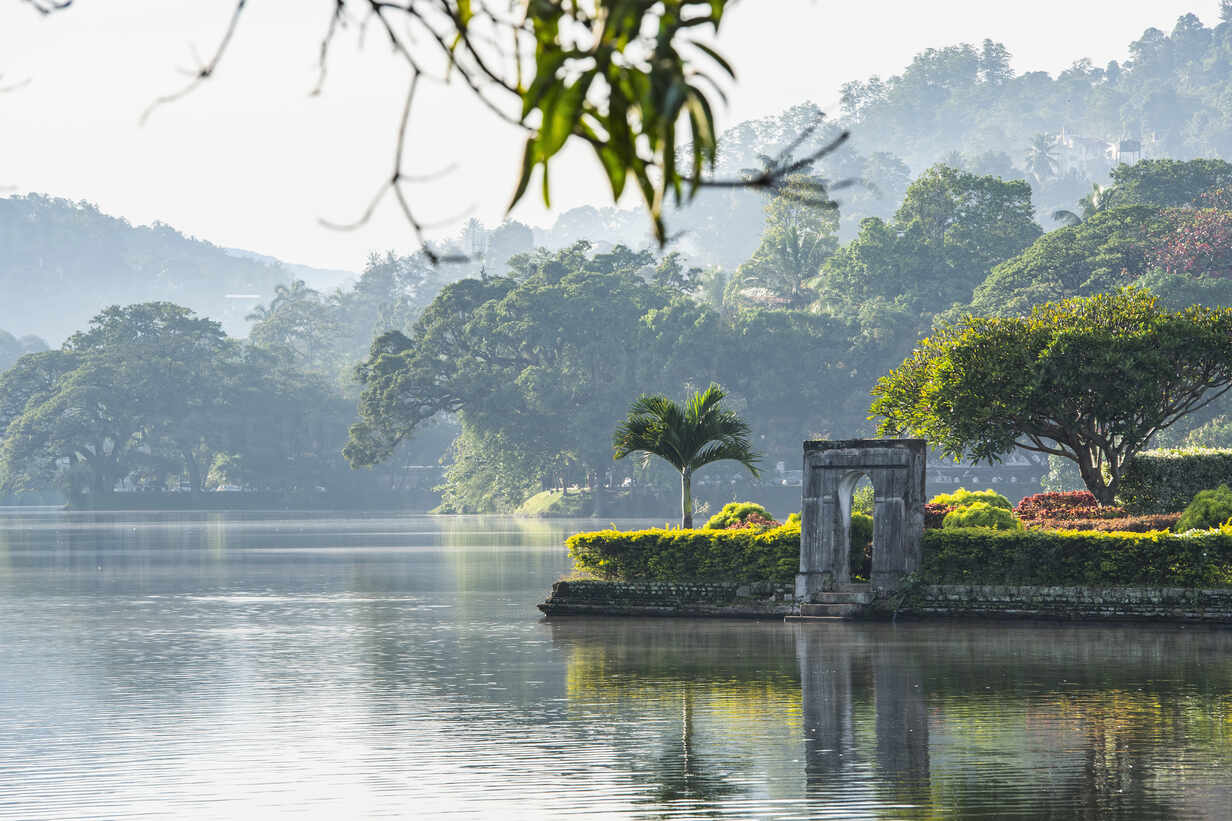
Just the other day I got to know about a singular bench.  Singular because it refers to a particular love story; singular also because Ruwan Bandujeewa wrote about it. And singular because it held some tears which, along with the bench, were invisible to all and, in fact, is no longer there.

This is not the first poem that Bandujeewa has written about love and the pain of love using the ‘lake’ as witness and ally, but this, written a few years ago I believe, is sad beyond description.
.
ŕ¶±ුවර ŕ·€ැŕ·€ ŕ·…ŕ¶ź ŕ¶¶ංŕ¶šුවක් මත
ŕ¶­ුŕ¶±ී ŕ¶šŕ·… ŕ¶šŕ¶łුŕ·…ŕ¶š් ŕ¶Żෙŕ¶šŕ¶š් ඇත
ŕ¶±ුවරු මේ ŕ¶¶ැŕ·€් ŕ¶Żŕ¶±්ŕ¶±ෙනම් ŕ¶±ැŕ¶­
ŕ¶‘ŕ¶­ැŕ¶± ŕ¶Żැŕ¶±් ŕ¶’ ŕ¶¶ංŕ¶šුවත් ŕ¶±ැŕ¶­.

It is not easy to translate:

Upon a bench by the Kandy Lake
a tear or two thinned out reside
citizens know not of these, indeed
even the bench is no longer there.


Bandujeewa plays with the ‘nuwara’ of Nuwara Wewa (Kandy Lake). 'Nuwara' is also 'city,' and ‘nuwaru’ refers to citizens but could also be ‘The people of Kandy.’ I can’t capture the rhyme in translation. Someone else, I hope, will. But all that is incidental.

Benches are nondescript things. We see them but do not wonder about who may have sat there, what kind of conversations they had. Not everyone leaves a tear behind and not all tears that are in fact the residue of love get etched into the wood or cement of the benches upon which love was declared or withdrawn. Benches go unnoticed and benches, noticed and unnoticed are sometimes removed. Where are they taken? Are they turned into firewood? At what point does the signature of tears become unreadable?

Years ago, a well-meaning friend decided that I had lost my mind. He said, ‘You are going zig-zag on the 138 bus route!’ Those who know the route, i.e. from Pettah to Maharagama and sometimes Kottawa or Homagama or else, turning at Kottawa towards Mattegoda or Rukmalgama, would understand. There’s a lot of traffic and many irresponsible drivers.  

He insisted that I would get knocked down.

‘There are no buses on this route,’ I laughed.

He laughed too.

And then I said, ‘there’s no such road either!’

And we couldn’t stop laughing for a long time.

There are benches and roads that are sat upon and along which people walk, respectively; lovers included. They own those benches. They own those roads. The bench and the road do not become less private although others use them. Like the sky, as my father once said.

But who erases them from the landscape? Why? And where are they thereafter stored? Memories are for lovers or rather those who loved but were not loved in return or else were loved in return but only for a while.

People don’t see. They don’t have to. Sometimes people will not suffer love and lovers. They are written out of narratives, along with bench, road and tear. And lovers, those who had words and spoke them softly and thereby enabled them to write upon the walls of hearts, are not only banished but are gagged as well. And yet it is possible to argue that the greatest tyranny is that of the beloved who will not love or claims heart-ink has indeed dried out. When it comes to that point, poetry gets written on benches with tears and benches themselves are spirited away.

There was a time when they came easy
but words came slow and slower still
not because hearts ran out of love-ink
but unnamed tyrannies shut the valves,
and yet, in impoverished times
heartbeat is word enough
and memory a notebook that will not burn.


The worlds we inhabit are so easily erased. Poetry lingers, even long after the beloved has evicted poet from the heart, tears have dried and benches that transcribed the most magical and tragic love stories are turned into firewood and ash. Thus are the seeds of love scattered across the earth.

And yet...

We write even when we don’t
and read splendid stories
on pages decreed to remain blank.
 

On benches too. Even if they no longer exist. 

['The Morning Inspection' is the title of a column I wrote for the Daily News from 2009 to 2011, one article a day, Monday through Saturday. This is the 285th article in the new series that began in December 2022. Links to previous articles are given below]

malindadocs@gmail.com

Other articles in this series: 

Reflections on things left unfinished

The virtues of an empty canvas

Rukshan does not age

Autumn days and nights thirteen centuries apart

Texts are ancient, transcription error-ridden

The naked truth

The poetry of resistance 

Dung-lies and flower-truths

The word as a sword held to the throat of truth

Residents of and residency in heart and mind

Merit, integrity and seniority in the superior courts

Hunters and 'victims' of immemorial light

The unbearable lightness of pause

Magic carpet to Dutuwewa

Gauze, blood-stained and torn

Seasons bookeneded by leaves on park benches

Writers' blocs and dead lines  

Stop Press!

The world shall not be emptied of poetry

Reclaiming the everyday with solidarities of tender fury

An Aussie broke a SLan heart in Ind for Afg

Writing magical pieces about something beautiful when time permits

The scattered archives of art and protest

Friendship that keep friends permanently at 16

Amherst: silent, rural, poetic and serendipitous 

The virtues of unemployability

A breathless hush at the close

Ahmed Issa, fearless and audacious in Gaza

Let us take a deep breath now...

How Grolier Poetry writes 'Harvard Square'

Let us write beautiful poetry

Following children and their smiles

Let's plant words in cracks and craters

Re-weaving lives and love

When the earth closes upon us...

Let us now march to the battleground of words

The most pernicious human shield

Who bombed Frankfurter Buchmesse

The truly besieged 

Love's austere and lonely offices

The mysteriously enjoined in the middle of nowhere

Serendipity now!

Reflections on the unimaginable 

Jackson Anthony is a book and will be read 

A village called Narberth Bookshop

Gateway drugs to A-B-C

'Irvin' and other one-word poems

Earth pieces Kerala and Sri Lanka

Obligation as bomb and ocean

In the land of insomnial poets

In and out of shadows

Over to Eve

When you don't need an invitation, it's home

When the Canadian House of Commons applauded a Nazi...

Touching the touch-me-nots

The importance of not skipping steps

No free passes to the Land of Integrity

Hector Kobbekaduwa is not a building, statue, street or stamp

Rajagala and the Parable of the Panner

Let's show love to Starbucks employees!

You've got mail?

Octavio Paz and Arthur C Clarke in the stratosphere 

Enduring solidarities 

Coco 'Quotes' Gauff!

9/11 and the calm metal instrument of Salvador Allende's voice 

What a memory-keeper foregoes 

Whitman, Neruda and things that wait in all things

Thilina Kaluthotage's eyes keep watch

Those made of love will fly

Profit: the peragamankaru of major wars

Helplessness and innocence

The parameters of entirety

In loving memory of Carrie Lee (1956-2020)

Mobsters on and off the screen

Transfixing and freeing dawns

We're here because we're here because we're here

Life signatures

Sha'Carri Richardson versus and with Sha'Carri Richardson  

A canvas for a mind-brush

Sybil Wettasinghe's shoes

Love is...

A stroll with Pragg and Arjun along a boulevard in Baku

Meditation on tree-art

Daya Sahabandu ran out of partners but must have smiled to the end

Gentle intrusions 

Sleeping well

The unleashing of inspiration

Write, for Pete's sake

Autumn Leaves Safeness

 Sapan and voices that erase borders

Problem elephants and problem humans

Songs from the vaekanda

The 'inhuman' elephant in a human zoo

Ivan Art: Ivanthi Fernando's efforts to align meaning

Arwa Turra, heart-stitcher

Let's help Jagana Krishnakumar rebuild our ancestral home

True national anthems

Do you have a friend in Pennsylvania (or anywhere?)

A gateway to illumination in West Virginia

Through strange fissures into magical orchards

There's sea glass love few will see 

Re-residencing Lakdasa Wikkramasinha

Poisoning poets and shredding books of verse

The responsible will not be broken

Home worlds

Ownership and tenuriality of the Wissahickon

Did you notice the 'tiny, tiny wayside flowers'?

Gifts, gifting and their rubbishing

History is new(s)

Journalism inadvertently learned

Reflections on the young poetic heart

Wordaholic, trynasty and other portmanteaus

The 'Loku Aiya' of all 'Paththara Mallis'

Subverting the indecency of the mind

Character theft and the perennial question 'who am I?'

Innocence

A degree in people

Faces dripping with time

Saji Coomaraswamy and rewards that matter

Revolutionary unburdening

Seeing, unseeing and seeing again

Alex Carey and the (small) matter of legacy

The Edelweiss of Mirissa 

The insomnial dreams of Kapila Kumara Kalinga 

The clothes we wear and the clothes that wear us (down) 

Every mountain, every rock, is sacred 

Manufacturing passivity and obedience 

Precept and practice 

Sanjeew Lonliyes: rawness unplugged, unlimited 

In praise of courage, determination and insanity 

The relative values of life and death 

Feet that walk 

Sarinda's eyes 

Poetry and poets will not be buried 

Sunny Dayananda 

Reunion Peradeniya (1980-1990) 

What makes Oxygen breathable?  

Sorrowing and delighting the world 

The greatest fallacy  

Encounters with Liyanage Amarakeerthi 

Beyond praise and blame 

Letters that cut and heal the heart 

Vanished and vanishing trails 

Blue-blueness 

A forgotten dawn song from Embilipitiya 

The soft rain of neighbourliness  

The Gold Medals of being 

Jaya Sri Ratna Sri 

All those we've loved before 

Reflections on waves and markings 

A chorus of National Anthems 

Saying what and how 

'Say when' 

Respond to insults in line with the Akkosa Sutra 

The loves of our lives 

The right time, the right person 

The silent equivalent of a thousand words 

Crazy cousins are besties for life 

Unities, free and endearing 

Free verse and the return key

"Sorry, Earth!" 

The lost lyrics of Premakeerthi de Alwis 

The revolution is the song 

Consolation prizes in competitions no one ever wins 

The day I won a Pulitzer 

Ko? 

Ella Deloria's silences 

Blackness, whiteness and black-whiteness 

Inscriptions: stubborn and erasable  

Thursday! 

Deveni: a priceless one-word koan 

Enlightening geometries 

Let's meet at 'The Commons' 

It all begins with a dot 

Recovering run-on lines and lost punctuation 

'Wetness' is not the preserve of the Dry Zone 

On sweeping close to one's feet 

Kumkum Fernando installs Sri Lanka in Coachella, California

To be an island like the Roberts... 

Debts that can never be repaid in full

An island which no flood can overwhelm 

Who really wrote 'Mother'? 

A melody faint and yet not beyond hearing 

Heart dances that cannot be choreographed 

Remembering to forget and forgetting to remember 

On loving, always 

Authors are assassinated, readers are immortal 

When you turn 80... 

It is good to be conscious of nudities  

Saturday slides in after Monday and Sunday somersaults into Friday  

There's a one in a million and a one in ten 

Gunadasa Kapuge is calling 

Kumkum Fernando installs Sri Lanka in Coachella, California 

Hemantha Gunawardena's signature 

Pathways missed 

Architectures of the demolished 

The exotic lunacy of parting gifts 

Who the heck do you think I am? 

Those fascinating 'Chitra Katha' 

The Mangala Sabhava 

So how are things in Sri Lanka? 

The most beautiful father 

Palmam qui meruit ferat 

The sweetest three-letter poem 

Buddhangala Kamatahan 

An Irish and Sri Lankan Hello 

Teams, team-thinking, team-spirit and leadership 

The songs we could sing in lifeboats when we are shipwrecked 

Pure-Rathna, a class act 

Jekhan Aruliah set a ball rolling in Jaffna 

Awaiting arrivals unlike any other 

Teachers and students sometimes reverse roles 

Matters of honor and dignity 

Yet another Mother's Day 

A cockroach named 'Don't' 

Colombo, Colombo, Colombo and so forth 

The slowest road to Kumarigama, Ampara 

Sweeping the clutter away 

Some play music, others listen 

Completing unfinished texts 

Mind and hearts, loquacious and taciturn 

I am at Jaga Food, where are you? 

On separating the missing from the disappeared 

Moments without tenses 

And intangible republics will save the day (as they always have) 

The world is made of waves 

'Sentinelity' 

The circuitous logic of Tony Muller 

Rohana Kalyanaratne, an unforgettable 'Loku Aiya' 

Mowgli, the Greatest Archaeologist 

Figures and disfigurement, rocks and roses 

Sujith Rathnayake and incarcerations imposed and embraced 

Some stories are written on the covers themselves 

A poetic enclave in the Republic of Literature 

Landcapes of gone-time and going-time  

The best insurance against the loud and repeated lie 

So what if the best flutes will not go to the best flautists? 

There's dust and words awaiting us at crossroads and crosswords 

The books of disquiet 

A song of terraced paddy fields 

Of ants, bridges and possibilities 

From A through Aardvark to Zyzzyva  

World's End 

Words, their potency, appropriation and abuse 

Street corner stories 

Who did not listen, who's not listening still? 

The book of layering 

If you remember Kobe, visit GOAT Mountain 

The world is made for re-colouring 

The gift and yoke of bastardy 

The 'English Smile' 

No 27, Dickman's Road, Colombo 5 

Visual cartographers and cartography 

Ithaca from a long ago and right now 

Lessons written in invisible ink 

The amazing quality of 'equal-kindness' 

A tea-maker story seldom told 

On academic activism 

The interchangeability of light and darkness 

Back to TRADITIONAL rice 

Sisterhood: moments, just moments 

Chess is my life and perhaps your too

Reflections on ownership and belonging 

The integrity of Nadeesha Rajapaksha 

Signatures in the seasons of love

To Maceo Martinet as he flies over rainbows 

Sirith, like pirith, persist 

Fragrances that will not be bottled  

Colours and textures of living heritage 

Countries of the past, present and future 

A degree in creative excuses

Books launched and not-yet-launched 

The sunrise as viewed from sacred mountains 

The ways of the lotus 

Isaiah 58: 12-16 and the true meaning of grace 

The age of Frederick Algernon Trotteville 

Live and tell the tale as you will 

Between struggle and cooperation 

Of love and other intangibles 

Neruda, Sekara and literary dimensions 

The universe of smallness 

Paul Christopher's heart of many chambers 

Calmness gracefully cascades in the Dumbara Hills 

Serendipitous amber rules the world 

Continents of the heart