Showing posts with label Pablo Neruda. Show all posts

15 October 2026

Conversations with a Peradeniya sentinel


Two stone lions guard one of the entrances to the Faculty of Arts, University of Peradeniya. The pedestal upon which they’ve stood watch over the comings and goings of students, teachers, non-academic staff and visitors are spacious enough for one or two people to sit. I have sat there often. Sometimes alone and sometimes not.

They’ve been there for decades. Long before I first saw them. They still stand. Observing. Eavesdropping.  

The placement and stature of these beasts make them hard for anyone to miss, especially undergraduates in this faculty. And over the years, naturally one could say, they’ve lent themselves to symbolic expression in all kinds of poetry, love in particular.  

Love and revolution with two stone elements as witnesses. What they’ve ‘seen’ and ‘heard’ are but grist for a poetic mill, nothing more, although one may argue that poetry can feed the resolve to placate the anger of the world. Anger and perhaps sorrow as well.  

Theoretically, a poet can give life to anything and everything and not only as symbols. Inanimate things can be given eyes and ears. Hearts and minds can be conferred upon them. And of course voice. Pablo Neruda has an entire collection dedicated to ‘ordinary things,’ which include a lemon, wine, the onion, salt, tomatoes, a large tuna in the market and a chestnut on the ground. His poetic genius willed life into all kinds of things and he encouraged thereby others to recognise the animate in that which is commonly considered not to have volition.

‘Why don’t they train helicopters to suck honey from sunlight?’

Why don’t they, really, whoever ‘they’ may be? Policy advocates, makers and implementers will not be moved though. On the other hand, such formulation could perhaps persuade the deciders in ‘rooms where it happens,’ to approach matters differently, see that which is almost imperceptible and draw inspiration from the vast world that exists out of easy equations and clinical policy papers framed by theories which are also too easy in that they toss things resisting categorisation and quantification into the easy-bin called ‘externalities.’

But those two lions spoke to me a few days ago when I, along with a few batchmates, decided to visit our undergraduate haunts before moving to the Peradeniya Rest House for a reunion.  

What are your thoughts now
after so many flowers bloomed
so many dreams wilted
and so many convictions buried?
Did soft words grow hard enough
so they could acquire greater tenderness
did betrayal strengthen surviving friendships
guilt obliterated by deliberate forgetting
and nausea cured by new verbal remedies?
There was a girl here, I remember,
two perhaps or more
and words decorated with metaphors
heard so many times that they flew
to untraceable registers smudged by rain
animated analyses flew from determine eyes
but I ignored name-drop and term-drop
(frequency taught me that);
but this is what I need to know:
where is that boy now (forget the girls)
buried in an avalanche,
renamed by tragedy unexpected and enormous,
broken like all great plans
hatched in these gardens,
frozen mid-flight
as he flew on dream-wings
and scattered like raindrops
in monsoonal frenzy?


All of this in a fraction of a second; subliminal communiques that came in code and had to be deciphered somewhere near the waters of the Basavakkulama several days later as a setting sun, a cloud-formation above a stupa and single oruwa in silhouette related others stories in various degrees of animation.  

I don’t know the answers and I don’t think anyone who has been interrogated by one or both of the gal-sinhayas would know either. I figured that the questions were actually an invitation to remember things lost and forgotten, a doorway to nostalgia perhaps. I didn’t accept.  

The university of that other time is no more. The university of that other time, paradoxically, is as alive as it was then. I didn’t say ‘say cheese’ and didn’t have to. The lions never stop smiling, although there are times I’ve wondered if it is a smile or an almost polite laugh. I didn’t smile or cry. No exchanges of niceties. That which was once is no more, as happens and as it should.

I never owned Peradeniya although I believed I did. Peradeniya, all of it, owned me. In another century and in a country I cannot revisit.  I tiptoed away. And that’s my story of the gal-sinhayo of the Arts Faculty, University of Peradeniya.

02 October 2026

Poetic matters


The Colombo International Book Fair (CIBF) is a carnival. On the surface, a literary carnival — you get the books, book stalls, book lovers presumably, book launches and various literature-related events. Good stuff, but not for me. I do visit, but only for an hour or two. I prefer to spend that time at the Kavi Poth Salpila, the poetry-book stall run by award-winning author Mahinda Prasad Masimbula.

I stopped by for a few minutes on Tuesday. It was not the ritual stop, but a pause for a quick perusal before proceeding to the ‘Sankhathana Mandapaya’ (The Discourse Pavilion) where I was to be a panelist discussing the question, ‘Does poetry still matter?’

My quick-browse let to the purchase of a few books: verses penned by Masimbula’s for a teledrama based on his book ‘Manikkavatha,’ W A Abeysinghe’s translations of a set of poems by Pushkin, Nandun Yasitha Dissanayake’s long-titled latest collection, Kanchana Amilani’s ‘Kala Rekha (Timeline)’ and Timran Keerthi’s ‘Maduravathi nam tharu rataava.’ They constituted a short answer to that odd but perhaps relevant-to-some question I was supposed to help unravel a little later.

It was an interesting discussion. The discussion was live-streamed and there does not require transcription even in condensed form. As always, my fallback to being chronically unprepared was the fact that others always say something interesting. I owe the moderator, Tinaz Amit, and the fellow-panelists, Dr Sujeeva Sebastian, Shirania Rajapakse and Anupama Godakanda. As always, the discussion stayed long afterwards and inspired further reflection.

Does poetry matter? Does anything matter, for that matter? Once the second question pops up, the first is rendered meaningless. Matter-less, if you so wish.

People do make careers of their art. Some become wealthy. Most, historically, die in poverty. Extravagant spending can land the best in dire straits. I had thought Shakespeare died poor and said as much, but apparently he did not. The lives artists get to lead are not always related to the worth of their art. The point, however, is that it doesn’t matter. It doesn’t matter if art pays. It doesn’t matter if no one understands. Or rather, it matters very little. Some do enjoy accolade-glow. It’s nice to be recognised. Recognised or not, however, people write, paint, compose music, dance, act etc. There’s reward in the act and that’s not always something one whispers to oneself by way of consolation.

There are poetry-matters moments. I mentioned a couple. The first was about Pablo Neruda. He recounts that he got into a brawl with someone in a bar. That someone was tossed out. When Neruda walked out sometime later, the man was there and came towards him. Neruda’s initial thought was that the man wanted a second round of fisticuffs. No, he had been distraught when he learned that he had dared to attack Pablo Neruda, whose poetry he had recited to the woman he eventually married. And then he proceeded to recite the poem. Poetry mattered then.

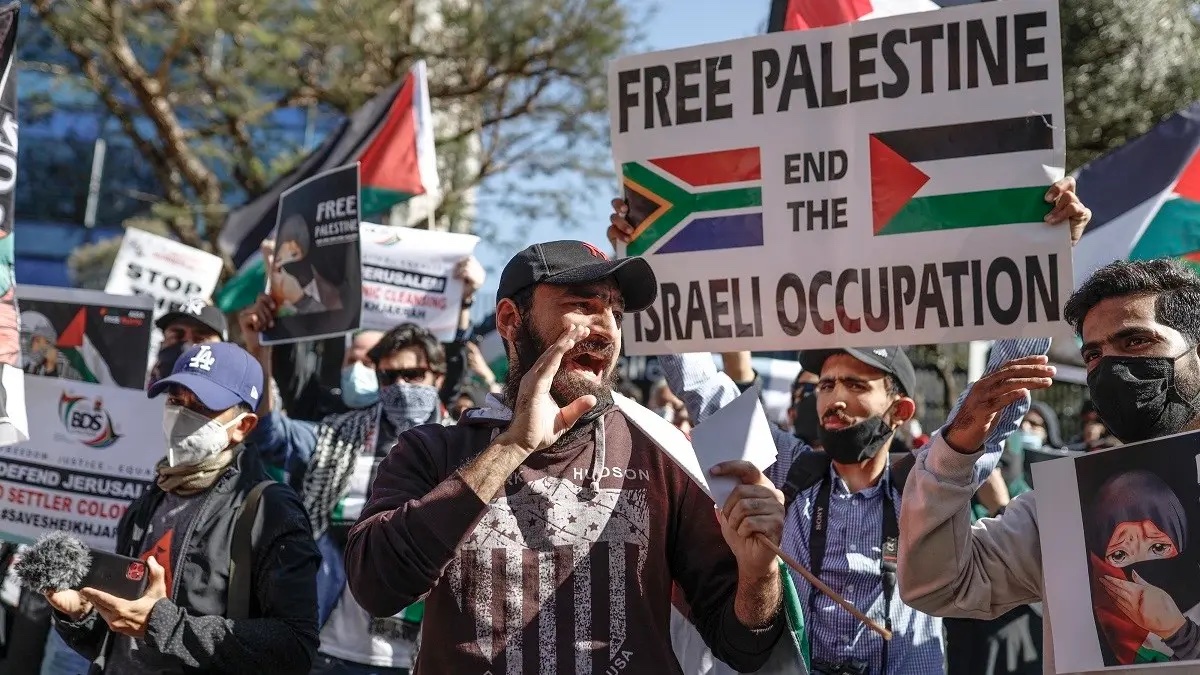
Three years ago while visiting my niece in Madison, Wisconsin, I observed a demonstration condemning the genocidal attacks by Israel on the people of Palestine. There was a young man carrying a placard with the following legend: ‘Every Beautiful Poem is an Act of Resistance.’

Worth a write. Back then I wrote a daily article for this same paper, the Daily News. So I wrote about beautiful poetry and resistance. That day, coincidentally, poem popped up in Facebook Memories:

So let there be stones
beautiful ones
cut by hand or time
with edges that can wait
for moonquake and anarchy
those necessary preconditions
for bloomage and bleeding
mirrors that fracture desolate skies
and trigger
the eruption of rainbows,
stones gathered
from every stoning
that turned broken bodies
into words
to re-cleanse
our desecrated hearts.


Related. So I related the relationship. Poetry mattered. Matters in matters of the heart, matters in acts of resistance. Like pavement stones.

Matters very little, someone might say, although others would argue that poetry did play a role in preparing hearts for resistance and rebellion. The true dimensions of the matter at hand was perhaps best articulated by Neruda. It’s a line I’ve quoted often and which I mentioned during the discussion as well: ‘Ah! If only with a drop of love or poetry, we could placate the anger of the world; but that requires resolute hearts.’  

There was a drop of poetry in Madison, Wisconsin. There was a drop of poetry outside a nondescript bar somewhere in Latin America many decades ago. Drops of love, they could also be called. The anger of the world does not subside easily, but something distasteful was nevertheless quelled. Dissolved. Just with a drop of poetry.

And here I am, more than fifty years later, talking about love and war, tears and poetry. Matters. And in this way are hearts made more resolute, I do believe.


21 August 2026

A poet's obligation


‘Poet’s obligation’ is the title of one of Pablo Neruda’s poems. Obligations are not laws; they speak more of ‘reethi’ or norms than ‘neethi’ or laws, for there are of course obligations associated with the law. The poet may or may not feel obliged by some legal, moral or social duty to act in a particular way or write about certain things, but in the end, like all artists and citizens, a large part of being is indulgence. We write or act because we feel  we owe ourselves something.  

Neruda believed that it was his destiny ‘to open the doors’ of prisons wherein there could be someone who for whatever reason ‘is not listening to the sea.’  He is therefore compelled to ‘ceaselessly listen to and keep the sea’s lamenting in [his] awareness.’

The ‘prisoner’ may hear and ask, ‘how can I reach the sea’ thereafter. And, as answer, Neruda offers the following:

And I shall broadcast, saying nothing,

the starry echoes of the wave,

a breaking up of foam and quicksand,

a rustling of salt withdrawing,

the grey cry of the sea-birds on the coast.

So, through me, freedom and the sea

will make their answer to the shuttered heart.

That’s a social task but it is at the same time a personal choice. No one held a gun at Neruda’s head and told him to stand witness to oceanic turmoil, the coronas of the galaxy, unnecessary but nevertheless ceaselessly produced poverty, the foam and quicksand of promise and pledge, the irreverent and insightful babble of the nondescript, or the grotesque interplay between god and devil. He chose to write so that through him the elements will offer salve to hearts shattered by unrequited love, injustice and humiliation.

If I were to think of the work of all the poets I have read, I am sure there will be multiple answers to the question, ‘why does/did he/she write?’ It’s like asking someone ‘why do you live?’ Such questions should never be grasped with intention to obtain a definitive answer. They will hover around the sensibilities of writers, readers and the illiterate who script their questions and answers in other ways. You can’t swat them away and you are not required to do so either. You can observe them, though.  

Lakdasa Wikkramasinha had obligations. He laid it out in a poem titled ‘The Poet.’

He is the one that, tossing a bomb into
The crowd, takes notes;

The one who, from an unseen distance

Levels on the tripod that black rifle

With sights that see as far as his soul
Trains and levels, manoeuvres for a clear sight

Of the speaker on the platform;

Waits, watching the clock, for the onset of a car

In the left corner of its back seat

Carrying the enemy

He explains why: [The poet], ‘unable to bear the circle of the seconds in his heart, is the bomb in the city, waiting to burst.’ That’s his ‘destiny’ or rather the task he set himself.

Both poets were acutely conscious of the world around them. We all are, more or less. Matthew Arnold in ‘Dover Beach’ wrote about the the sea, the tide, the long line of spray, the roar or pebbles, and it reminded him of Sophocles, who, hearing it ‘on the Aegean, ‘ read in it ‘the turbid ebb and flow of human misery.’

Moving to ‘the sea of faith’ Arnold is consumed by disenchantment and retreats or moves to a more assured if not less tumultuous sea; that of love. ‘Ah, love, let us be true to one another,’ he pleads almost in search of consolation because he believes he is being ‘swept with confused alarms of struggle and flight, where ignorant armies clash by night.’

His obligation is to himself, his peace of mind. And escapist, one might say, but then again, that’s a choice no one can or should quarrel with. It is all about reading the world and self in terms of what James Baldwin called ‘system(s) of reality.’

No one has the authority to determine the dimensions of reality. The poet sets it up and reads that universe, be it as small as a grain of sand or as immeasurable as the Milky Way, as he/she will.  

And the reader will pass judgment. One might call Neruda an intruder, Lakdasa a trouble-maker and Arnold self-indulgent. Another might applaud Neruda and Lakdasa for being inspired to report and change, and Arnold for being more cognisant of ‘long time’ and eternal verities.

But…

Sometimes poetry is a cup of tea
black without sugar but not too red
a herbal concoction infusing antidotes
medicine that won’t hurt but may not heal;
and yet made curative by sentiment
the will to manufacture a smile
and a prayer to lessen weight.


Neruda, Lakdasa and Arnold are long gone. Their words remain and are wrapped in layers of meaning they were perhaps unaware of. They’ve been crucified and resurrected, vilified and praised, ignored and cherished. Much like all things: subjected to the dharma of the following four dualities: joy-sorrow, praise-blame, profit-loss, fame-oblivion. Their work: medicine that won’t hurt but may not heal.

We have to live with all that.

07 November 2023

Writing magical pieces about something beautiful when time permits


I received a request this morning: ’Write a magical piece when time permits, about something beautiful.’  

It reminded me of a poem in which Pablo Neruda may have responded to a similar request. In I explain a few things. Neruda addresses the question, ‘what should a poet write about?’ What kind of poetry should be written, of course, is answered in the poem itself, translated by Nathaniel Tarn.
.
You are going to ask: and where are the lilacs?
and the poppy-petalled metaphysics ?
and the rain repeatedly spattering
its words and drilling them full
of apertures and birds?'

 
So he tells ‘all the news,’ of the Spain to which he has loaned his heart and words. He described the magic and beauty of the Spain of that moment, referring to the geraniums, the leather ocean, the dogs and children. And more:

[metres], litres, the sharp
measure of life,
stacked-up fish,
the texture of roofs with a cold sun in which
the weather vane falters,
the fine, frenzied ivory of potatoes,
wave on wave of tomatoes rolling down to the sea.
 
He writes of a morning when it all changed:

…one morning all that was burning,
one morning the bonfires
leapt out of the earth
devouring human beings -
and from then on fire,
gunpowder from then on,
and from then on blood.


He talks of the people he loved, among them the poet Federico Garcia Lorca: Federico, do you remember / from under the ground / where the light of June drowned flowers in your mouth? And how, he saw, with you and I, 'the blood of Spain tower like a tide,' and how everyone was [drowned] in one wave of pride and knives!
 

And so to the conclusion:
 
And you will ask: why doesn’t his poetry
speak of dreams and leaves
and the great volcanoes of his native land?
 
Come and see the blood in the streets.
Come and see
the blood in the streets.
Come and see the blood
in the streets!


There are flowers bursting somewhere on this planet. There are children laughing, harvests being gathered, tables being set, glasses being raised to toast the toast-worthy, and uncontainable hearts pouring out of lovers’ eyes and immediately translated into poetry.

Somewhere in Gaza and the West Bank, meanwhile, a mother is feeding her infant, a child is making castles out of rubble, there’s a song that outshouts the inhumanity’s earth-shattering eruption and the silence of the world. All of it is beautiful and perhaps more tender than the magic of other times. 

In dark times, however, poets write about the darkness or should as Bertold Brecht once said. And that poetry is being written as I write. Whereas the mainstream media  which includes BBC, the New Yorker, New York Times, Fox News etc embarrasses itself with convolution, falsehoods and scandalous silence on the horrific crimes against humanity perpetrated by the Israeli government and endorsed by the USA, UK and other allies, there are literally millions of people who have raised and are raising the voice of objection in solidarities that are beautiful, magical and poetic.

All. The. Time.


Jews for Peace is one organisation that has consistently and in their thousands come out in protest of the barbarism perpetrated in their name by the Israeli government. People in almost every country have staged massive protests in their towns and cities. In many protests the names of Palestine's children, children robbed from us by Israel with the assistance of the US, UK and European governments, were read aloud.

Here’s a note from a writer, one of the hundreds who signed a petition vehemently condemning the wanton destruction of Gaza and the killing of Palestinian civilians, especially children:


‘South Africa's streets were flooded. People filled Victoria Station in London. Palestinian flags now fly all over the world. We are 75 years too late for so many people. Too late for so much. Our silence for decades, our willingness to use that word "complicated," our "this is the most important election" excuse (a phrase that has lead to us postponing everything from reversing environmental degradation to ending the daily brutality toward our Black brothers and sisters, and certainly to permitting arms manufacturers to rule the world), lead us to this moment. Palestine is not on another planet. It is accessible by air, sea, land. And yet Palestinians are, as we are, being HELD HOSTAGE by Israel through the force of their weapons. The meek might inherit the earth. But they have to be willing to fight for it. This is our fight.’


And if there’s no time to write the poetry of all that is at once magical, terrifying, inhumane, pitiful, courageous, tender and beautiful, we need to ask ourselves if there ever will be time to write about the light of this November in the year 2023 bursting like an orchard in our mouths, moments breaking into delightful patterns in the kaleidoscope of love’s immemorial blush, dreams that uncurl with morning dew and other things that could stand witness but refuse to see the blood in the streets.  

['The Morning Inspection' is the title of a column I wrote for the Daily News from 2009 to 2011, one article a day, Monday through Saturday. This is the 262nd article in the new series that began in December 2022. Links to previous articles are given below]

malindadocs@gmail.com

Other articles in this series: 

The scattered archives of art and protest

Friendship that keep friends permanently at 16

Amherst: silent, rural, poetic and serendipitous 

The virtues of unemployability

A breathless hush at the close

Ahmed Issa, fearless and audacious in Gaza

Let us take a deep breath now...

How Grolier Poetry writes 'Harvard Square'

Let us write beautiful poetry

Following children and their smiles

Let's plant words in cracks and craters

Re-weaving lives and love

When the earth closes upon us...

Let us now march to the battleground of words

The most pernicious human shield

Who bombed Frankfurter Buchmesse

The truly besieged 

Love's austere and lonely offices

The mysteriously enjoined in the middle of nowhere

Serendipity now!

Reflections on the unimaginable 

Jackson Anthony is a book and will be read 

A village called Narberth Bookshop

Gateway drugs to A-B-C

'Irvin' and other one-word poems

Earth pieces Kerala and Sri Lanka

Obligation as bomb and ocean

In the land of insomnial poets

In and out of shadows

Over to Eve

When you don't need an invitation, it's home

When the Canadian House of Commons applauded a Nazi...

Touching the touch-me-nots

The importance of not skipping steps

No free passes to the Land of Integrity

Hector Kobbekaduwa is not a building, statue, street or stamp

Rajagala and the Parable of the Panner

Let's show love to Starbucks employees!

You've got mail?

Octavio Paz and Arthur C Clarke in the stratosphere 

Enduring solidarities 

Coco 'Quotes' Gauff!

9/11 and the calm metal instrument of Salvador Allende's voice 

What a memory-keeper foregoes 

Whitman, Neruda and things that wait in all things

Thilina Kaluthotage's eyes keep watch

Those made of love will fly

Profit: the peragamankaru of major wars

Helplessness and innocence

The parameters of entirety

In loving memory of Carrie Lee (1956-2020)

Mobsters on and off the screen

Transfixing and freeing dawns

We're here because we're here because we're here

Life signatures

Sha'Carri Richardson versus and with Sha'Carri Richardson  

A canvas for a mind-brush

Sybil Wettasinghe's shoes

Love is...

A stroll with Pragg and Arjun along a boulevard in Baku

Meditation on tree-art

Daya Sahabandu ran out of partners but must have smiled to the end

Gentle intrusions 

Sleeping well

The unleashing of inspiration

Write, for Pete's sake

Autumn Leaves Safeness

 Sapan and voices that erase borders

Problem elephants and problem humans

Songs from the vaekanda

The 'inhuman' elephant in a human zoo

Ivan Art: Ivanthi Fernando's efforts to align meaning

Arwa Turra, heart-stitcher

Let's help Jagana Krishnakumar rebuild our ancestral home

True national anthems

Do you have a friend in Pennsylvania (or anywhere?)

A gateway to illumination in West Virginia

Through strange fissures into magical orchards

There's sea glass love few will see 

Re-residencing Lakdasa Wikkramasinha

Poisoning poets and shredding books of verse

The responsible will not be broken

Home worlds

Ownership and tenuriality of the Wissahickon

Did you notice the 'tiny, tiny wayside flowers'?

Gifts, gifting and their rubbishing

History is new(s)

Journalism inadvertently learned

Reflections on the young poetic heart

Wordaholic, trynasty and other portmanteaus

The 'Loku Aiya' of all 'Paththara Mallis'

Subverting the indecency of the mind

Character theft and the perennial question 'who am I?'

Innocence

A degree in people

Faces dripping with time

Saji Coomaraswamy and rewards that matter

Revolutionary unburdening

Seeing, unseeing and seeing again

Alex Carey and the (small) matter of legacy

The Edelweiss of Mirissa 

The insomnial dreams of Kapila Kumara Kalinga 

The clothes we wear and the clothes that wear us (down) 

Every mountain, every rock, is sacred 

Manufacturing passivity and obedience 

Precept and practice 

Sanjeew Lonliyes: rawness unplugged, unlimited 

In praise of courage, determination and insanity 

The relative values of life and death 

Feet that walk 

Sarinda's eyes 

Poetry and poets will not be buried 

Sunny Dayananda 

Reunion Peradeniya (1980-1990) 

What makes Oxygen breathable?  

Sorrowing and delighting the world 

The greatest fallacy  

Encounters with Liyanage Amarakeerthi 

Beyond praise and blame 

Letters that cut and heal the heart 

Vanished and vanishing trails 

Blue-blueness 

A forgotten dawn song from Embilipitiya 

The soft rain of neighbourliness  

The Gold Medals of being 

Jaya Sri Ratna Sri 

All those we've loved before 

Reflections on waves and markings 

A chorus of National Anthems 

Saying what and how 

'Say when' 

Respond to insults in line with the Akkosa Sutra 

The loves of our lives 

The right time, the right person 

The silent equivalent of a thousand words 

Crazy cousins are besties for life 

Unities, free and endearing 

Free verse and the return key

"Sorry, Earth!" 

The lost lyrics of Premakeerthi de Alwis 

The revolution is the song 

Consolation prizes in competitions no one ever wins 

The day I won a Pulitzer 

Ko? 

Ella Deloria's silences 

Blackness, whiteness and black-whiteness 

Inscriptions: stubborn and erasable  

Thursday! 

Deveni: a priceless one-word koan 

Enlightening geometries 

Let's meet at 'The Commons' 

It all begins with a dot 

Recovering run-on lines and lost punctuation 

'Wetness' is not the preserve of the Dry Zone 

On sweeping close to one's feet 

Kumkum Fernando installs Sri Lanka in Coachella, California

To be an island like the Roberts... 

Debts that can never be repaid in full

An island which no flood can overwhelm 

Who really wrote 'Mother'? 

A melody faint and yet not beyond hearing 

Heart dances that cannot be choreographed 

Remembering to forget and forgetting to remember 

On loving, always 

Authors are assassinated, readers are immortal 

When you turn 80... 

It is good to be conscious of nudities  

Saturday slides in after Monday and Sunday somersaults into Friday  

There's a one in a million and a one in ten 

Gunadasa Kapuge is calling 

Kumkum Fernando installs Sri Lanka in Coachella, California 

Hemantha Gunawardena's signature 

Pathways missed 

Architectures of the demolished 

The exotic lunacy of parting gifts 

Who the heck do you think I am? 

Those fascinating 'Chitra Katha' 

The Mangala Sabhava 

So how are things in Sri Lanka? 

The most beautiful father 

Palmam qui meruit ferat 

The sweetest three-letter poem 

Buddhangala Kamatahan 

An Irish and Sri Lankan Hello 

Teams, team-thinking, team-spirit and leadership 

The songs we could sing in lifeboats when we are shipwrecked 

Pure-Rathna, a class act 

Jekhan Aruliah set a ball rolling in Jaffna 

Awaiting arrivals unlike any other 

Teachers and students sometimes reverse roles 

Matters of honor and dignity 

Yet another Mother's Day 

A cockroach named 'Don't' 

Colombo, Colombo, Colombo and so forth 

The slowest road to Kumarigama, Ampara 

Sweeping the clutter away 

Some play music, others listen 

Completing unfinished texts 

Mind and hearts, loquacious and taciturn 

I am at Jaga Food, where are you? 

On separating the missing from the disappeared 

Moments without tenses 

And intangible republics will save the day (as they always have) 

The world is made of waves 

'Sentinelity' 

The circuitous logic of Tony Muller 

Rohana Kalyanaratne, an unforgettable 'Loku Aiya' 

Mowgli, the Greatest Archaeologist 

Figures and disfigurement, rocks and roses 

Sujith Rathnayake and incarcerations imposed and embraced 

Some stories are written on the covers themselves 

A poetic enclave in the Republic of Literature 

Landcapes of gone-time and going-time  

The best insurance against the loud and repeated lie 

So what if the best flutes will not go to the best flautists? 

There's dust and words awaiting us at crossroads and crosswords 

The books of disquiet 

A song of terraced paddy fields 

Of ants, bridges and possibilities 

From A through Aardvark to Zyzzyva  

World's End 

Words, their potency, appropriation and abuse 

Street corner stories 

Who did not listen, who's not listening still? 

The book of layering 

If you remember Kobe, visit GOAT Mountain 

The world is made for re-colouring 

The gift and yoke of bastardy 

The 'English Smile' 

No 27, Dickman's Road, Colombo 5 

Visual cartographers and cartography 

Ithaca from a long ago and right now 

Lessons written in invisible ink 

The amazing quality of 'equal-kindness' 

A tea-maker story seldom told 

On academic activism 

The interchangeability of light and darkness 

Back to TRADITIONAL rice 

Sisterhood: moments, just moments 

Chess is my life and perhaps your too

Reflections on ownership and belonging 

The integrity of Nadeesha Rajapaksha 

Signatures in the seasons of love

To Maceo Martinet as he flies over rainbows 

Sirith, like pirith, persist 

Fragrances that will not be bottled  

Colours and textures of living heritage 

Countries of the past, present and future 

A degree in creative excuses

Books launched and not-yet-launched 

The sunrise as viewed from sacred mountains 

The ways of the lotus 

Isaiah 58: 12-16 and the true meaning of grace 

The age of Frederick Algernon Trotteville 

Live and tell the tale as you will 

Between struggle and cooperation 

Of love and other intangibles 

Neruda, Sekara and literary dimensions 

The universe of smallness 

Paul Christopher's heart of many chambers 

Calmness gracefully cascades in the Dumbara Hills 

Serendipitous amber rules the world 

Continents of the heart
  
The allegory of the slow road